
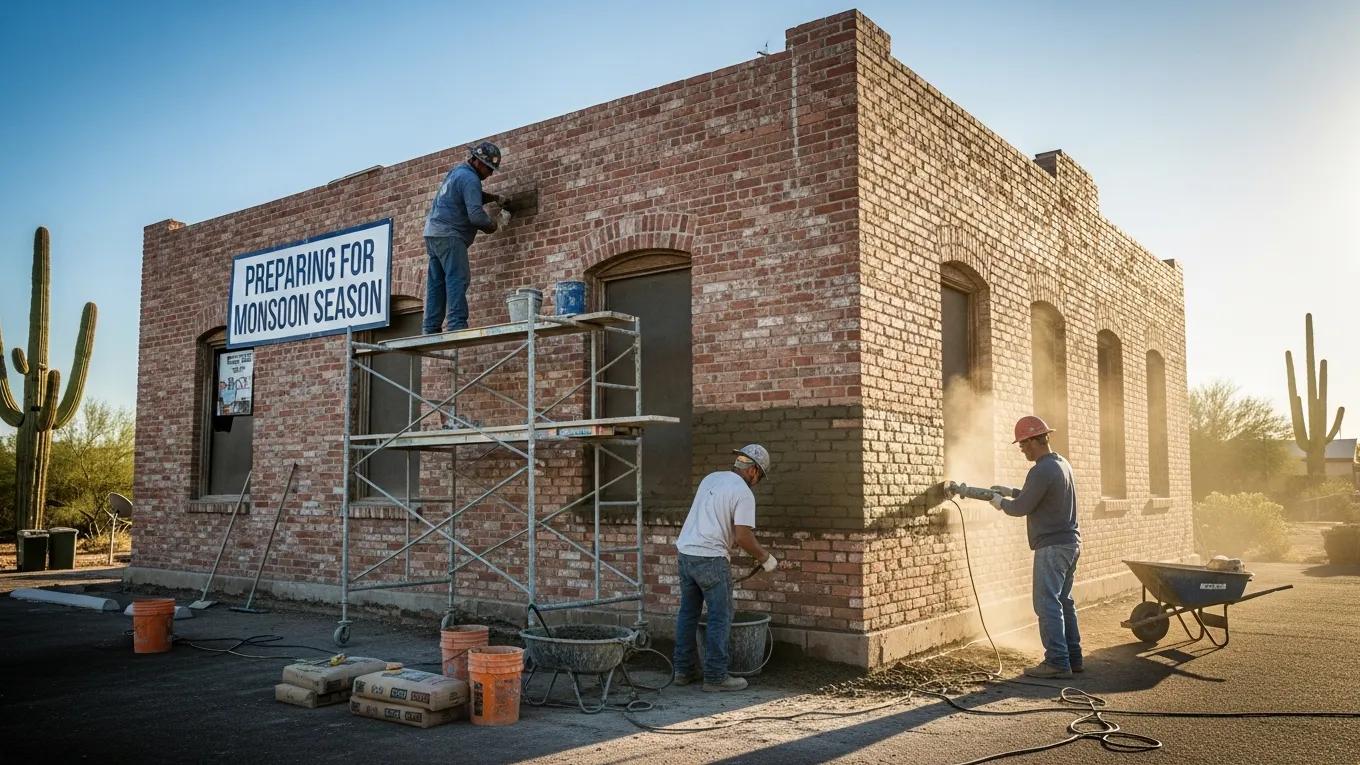
Commercial Tuckpointing in Phoenix & Gilbert, AZ: Why Pre-Monsoon Season Is the Best Time to Protect Your Building
As pre-monsoon season approaches in Phoenix and Gilbert, it’s a good time to evaluate the condition of your building’s masonry. Tuckpointing not only improves how a building looks, but also plays a critical role in protecting it from the harsh weather that comes with monsoon season. By understanding the mechanics and advantages of tuckpointing, property owners can make informed decisions to safeguard their investments.
New Era Masonry LLC provides commercial tuckpointing services tailored to buildings in the Phoenix and Gilbert areas.
Benefits and Importance of Commercial Tuckpointing
Tuckpointing offers several key advantages that contribute to the longevity and integrity of masonry structures. By replacing deteriorated mortar, tuckpointing strengthens the overall structure, preventing water infiltration through compromised mortar joints. Freshly tuckpointed walls enhance the visual appeal of buildings, making them more attractive to tenants and customers. Proper tuckpointing can also improve insulation, leading to reduced energy costs and a more comfortable indoor environment.
Proper tuckpointing can also improve how a building handles moisture and temperature changes, especially in climates like Phoenix where heat and seasonal storms put extra stress on masonry.
These benefits highlight the importance of timely tuckpointing services, especially before the onset of the monsoon season. Neglecting tuckpointing can lead to severe consequences, including water damage, mold growth, and even structural failure. By addressing these issues proactively, property owners can avoid costly repairs and ensure the longevity of their buildings. Regular maintenance through tuckpointing can also enhance property value and reduce long term repair costs.
Commercial Tuckpointing Process, Techniques, and Materials
Commercial tuckpointing is a specialized masonry technique that involves the repair and replacement of mortar joints in brick and stone structures. The process begins with the careful removal of old, damaged mortar, followed by the application of new mortar, often colored to match the existing bricks. This results in a seamless appearance that restores the building’s aesthetic and reinforces its structural integrity. This process typically requires removing mortar to a consistent depth to ensure the new material bonds properly and performs over time.
Tuckpointing techniques vary depending on the type of masonry and the extent of damage. Common methods include hand tooling for precise control and finish, and the use of power tools for more extensive repairs, which are faster and more efficient. High quality mortar is crucial for effective tuckpointing, with material selection considering factors such as climate, building age, and masonry type. Using the correct mortar type is especially important in Arizona, where temperature fluctuations and moisture exposure during monsoon season can impact long-term performance.
Optimal Timing and Risks of Delaying Tuckpointing
The pre-monsoon season is the ideal time for tuckpointing in Phoenix and Gilbert. The dry conditions during this period allow for effective curing of new mortar, ensuring a strong bond that can withstand the upcoming heavy rains. Monsoon weather poses significant risks to commercial buildings, primarily through water infiltration, which can exacerbate existing weaknesses in masonry, leading to structural damage and increased repair costs. In many cases, we see the most damage occur after the first heavy storms, when weakened mortar joints allow water to penetrate the structure.
Delaying tuckpointing until after the monsoon season can result in several risks, including potential damage to masonry such as mold growth and deterioration, as well as increased repair costs since addressing damage after it occurs is often more expensive than preventative maintenance.
Professional Masonry Restoration Services by New Era Masonry LLC
New Era Masonry LLC specializes in commercial tuckpointing services, providing expert solutions tailored to the unique needs of buildings in the Phoenix and Gilbert areas. Their experienced team utilizes high quality materials and specialized techniques to ensure long lasting repairs that enhance both the appearance and structural integrity of buildings.
Understanding the local climate is crucial for effective masonry repairs. New Era Masonry LLC’s expertise in the Phoenix and Gilbert areas allows them to select appropriate materials and techniques that withstand the region’s unique weather conditions, ensuring superior service quality and building protection.
Signs Indicating the Need for Immediate Tuckpointing
Property owners should be vigilant for signs that indicate the need for tuckpointing, including deteriorated mortar with crumbling or missing joints, visible cracks in the masonry signaling underlying issues, and water damage such as stains or mold that necessitate prompt repair. Common masonry issues requiring professional attention include persistent moisture leading to structural problems, loose or shifting bricks compromising integrity, and cracked mortar joints allowing water penetration. In many cases, deteriorating mortar joints are the first sign that a building needs professional attention, even before visible structural issues appear.
Early detection of these issues is vital for preventing costly structural damage. By addressing problems promptly, property owners can maintain the integrity of their buildings and avoid extensive repairs in the future.
FAQs
How often should commercial buildings in Phoenix need tuckpointing?
The frequency of tuckpointing depends on the building’s age, exposure to weather, and overall maintenance. In Phoenix, commercial properties may require tuckpointing every 5 to 15 years due to intense heat, UV exposure, and seasonal monsoon storms that accelerate mortar deterioration. Regular inspections can help identify early signs of wear before more serious damage develops.
Can tuckpointing prevent water damage during monsoon season?
Yes, tuckpointing plays a critical role in preventing water damage by sealing gaps in deteriorated mortar joints. When mortar begins to break down, it creates entry points for water, which can lead to structural damage, mold growth, and interior issues. Completing tuckpointing before monsoon season helps protect the building by reinforcing these vulnerable areas before heavy rainfall begins.
