
New Era Masonry Frequently Asked Questions
Planning a masonry project often raises questions about materials, costs, repairs, timelines, durability and Arizona weather. This guide provides practical answers for residential and commercial property owners considering professional masonry services.
Every property and masonry project is different. The information below can help you understand common project considerations, but an on-site evaluation may still be needed before the final scope, schedule and construction approach can be determined.
Contact New Era Masonry to discuss your wall, concrete, brick, block, stone, demolition, repair or custom masonry project directly with our team.

General Masonry FAQs
These questions explain the basics of masonry construction, common material options and the benefits of hiring an experienced masonry contractor.
What Is Masonry Construction?
Masonry construction uses individual units such as brick, concrete block, natural stone or manufactured stone, typically joined with mortar. Masonry may be used for walls, structural elements, veneers, patios, outdoor features and decorative architectural details.
What Types Of Masonry Services Do You Provide?
New Era Masonry provides services that include:
- Custom residential and commercial masonry
- Concrete pours and related concrete work
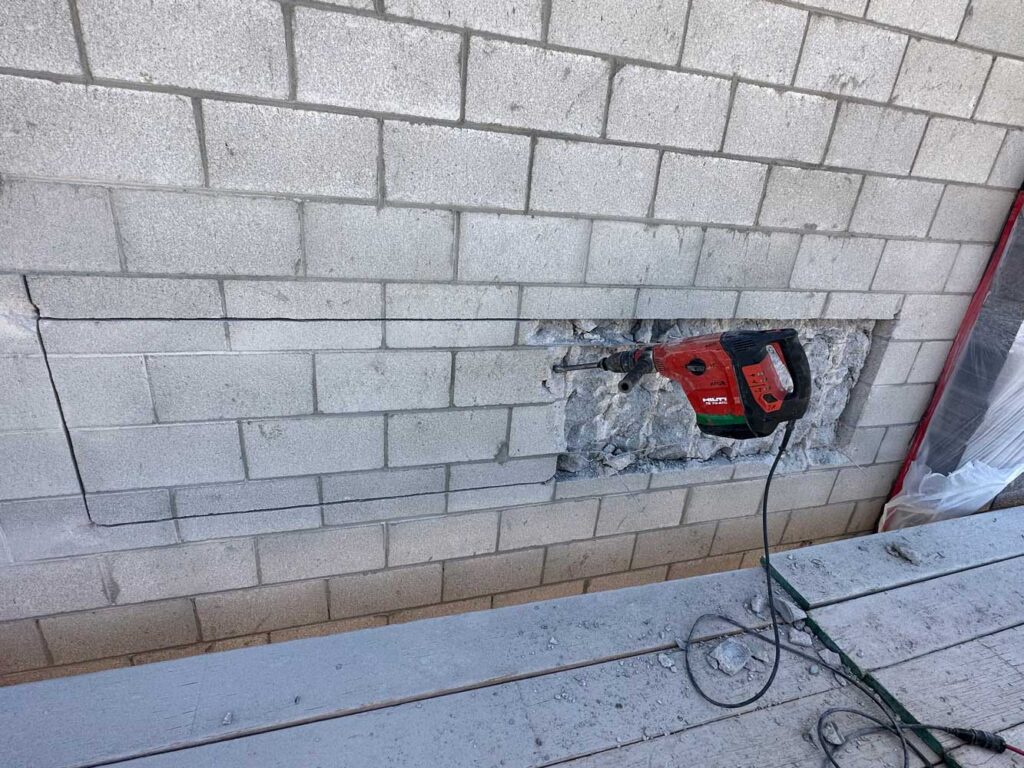
- Masonry demolition and haul-away
- Brick, block, stone and mortar repairs
- Masonry color matching
- Mortar joint restoration and tuck pointing
Visit our masonry services page to explore the complete service range.
Is Masonry Suitable For Homes And Businesses?
Yes. Masonry is used for residential homes, commercial buildings, privacy walls, property enclosures, outdoor living features, decorative accents and many other applications. The materials and construction methods should be selected around the project's intended use.
How Durable Is Masonry Construction?
Properly designed and installed masonry can provide long-term durability. Its service life depends on material quality, workmanship, structural support, drainage, environmental exposure and ongoing maintenance.
Why Hire A Professional Masonry Contractor?
Masonry construction requires careful material selection, preparation, alignment, mortar work, reinforcement and curing. An experienced masonry contractor can evaluate how these factors relate to the property and the intended finished result.
Can Masonry Be Customized To Match My Property?
Yes. Brick, block, stone, mortar, patterns, colors, textures and dimensions can be coordinated with the property's architecture. Learn more about our custom masonry services .
Project Planning And Pricing FAQs
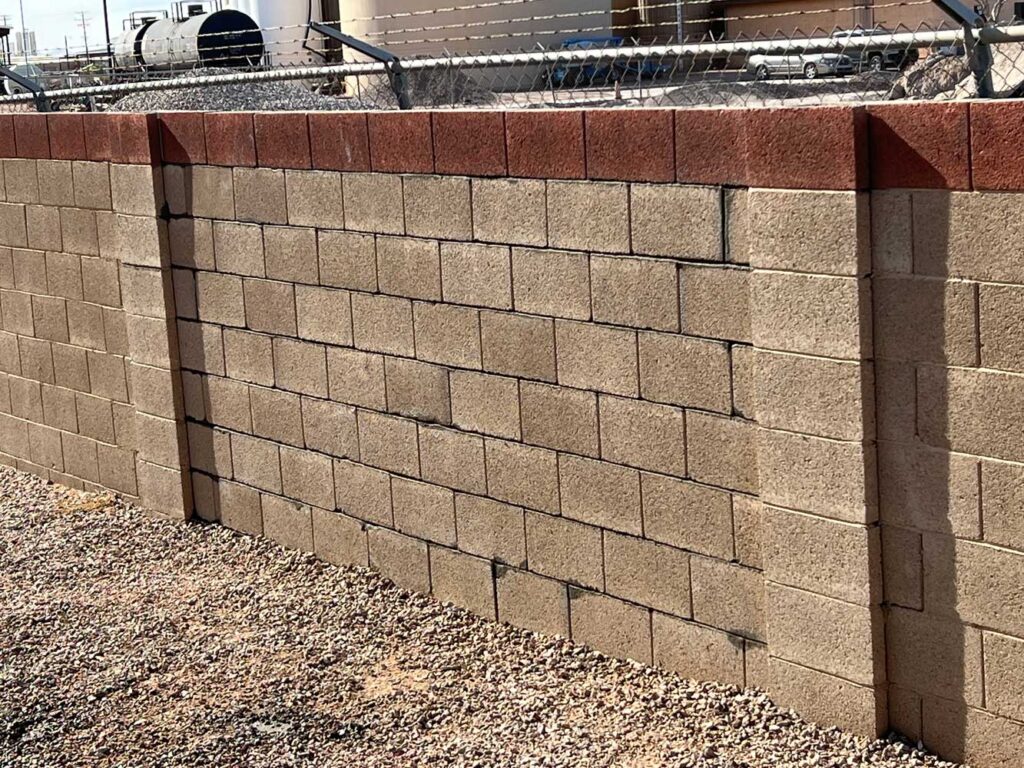
Understand what affects masonry costs, project schedules, site evaluations and the information needed before work can begin.
How Much Does A Masonry Project Cost?
Masonry project pricing varies based on the scope, dimensions, materials, design complexity, access, demolition, site preparation and structural requirements. A property evaluation and defined project scope are generally needed before accurate pricing can be prepared.
How Long Does A Masonry Project Take?
A small repair may take significantly less time than a custom wall, demolition and rebuild, or larger commercial project. Scheduling can be influenced by material availability, site access, project size, curing requirements and weather.
Do You Need To See The Property Before Providing Pricing?
Many projects benefit from an on-site evaluation. Photographs and preliminary details may help begin the discussion, but access, dimensions, existing damage and construction conditions can be difficult to assess accurately without viewing the property.
What Information Should I Provide About My Project?
Helpful information may include:
- The property address and project location
- The type of masonry or concrete work needed
- Approximate dimensions
- Photographs of the area or damage
- Your preferred materials or finished appearance
- Any known access or scheduling restrictions
Do Masonry Projects Require Permits?
Permit requirements vary by municipality, project type, wall height, structural scope and property conditions. Property owners should confirm local requirements before construction begins. Additional engineering or approvals may be required for some projects.
Can Demolition And New Construction Be Coordinated?
Yes. New Era Masonry can coordinate masonry demolition with the repair, replacement or custom masonry work that follows. This helps keep the removal and reconstruction phases aligned.
New Era Masonry LLC: Masonry Construction FAQs
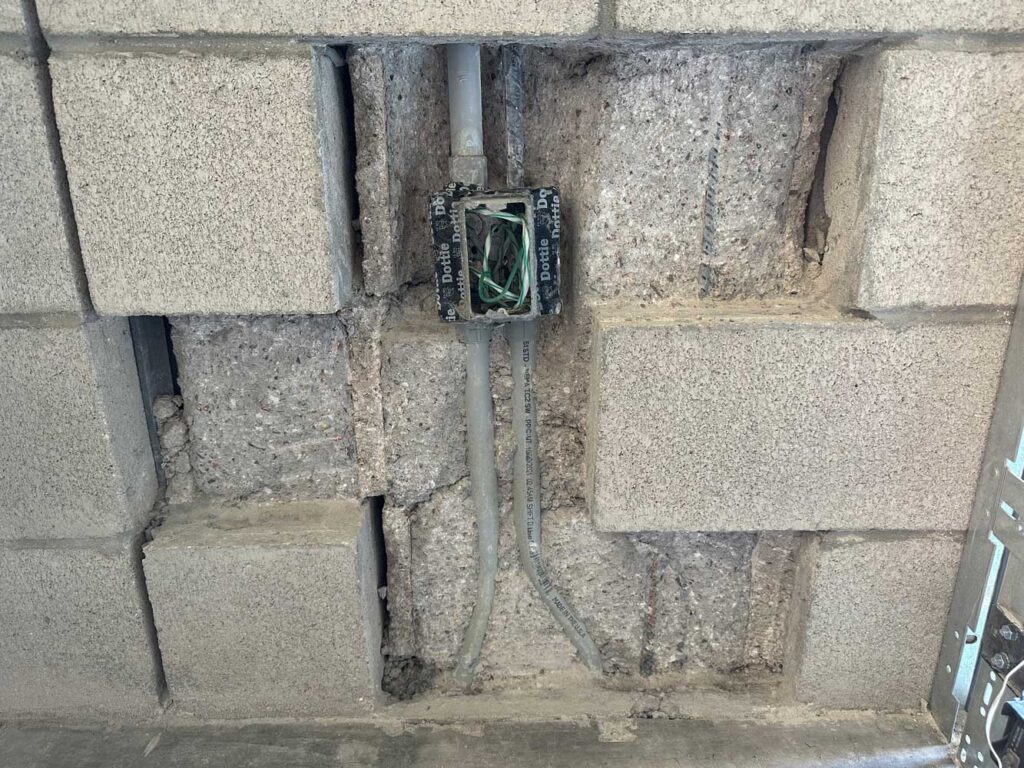
Learn when damaged masonry may be repaired, when sections may need rebuilding and why mortar deterioration should not be ignored.
What Types Of Masonry Damage Can Be Repaired?
Repairs may address cracked brick or block, deteriorated mortar, loose stone, damaged veneer, isolated wall sections and moisture-related wear. The appropriate repair depends on the cause, severity and condition of the surrounding masonry.
What Causes Cracks In Masonry Walls?
Cracks may be associated with settlement, soil movement, thermal expansion, moisture, impact, inadequate support or movement in adjoining construction. The crack pattern should be evaluated before a repair method is selected.
Can A Cracked Masonry Wall Be Repaired Without Rebuilding It?
Some localized cracks can be repaired without rebuilding the entire wall. However, leaning, bulging, displaced or extensively cracked masonry may require partial reconstruction or replacement.
What Is Masonry Tuck Pointing?
Tuck pointing restores deteriorated mortar joints by removing weakened mortar and installing compatible replacement material. It can improve weather resistance and preserve serviceable brick, block or stone.
How Do I Know If Mortar Joints Need Repair?
Common warning signs include cracked mortar, missing sections, powdery joints, deep recession, moisture staining and masonry units that have begun to loosen. Learn more about masonry tuck pointing .
Should A Leaning Masonry Wall Be Evaluated?
Yes. A leaning, bowed or displaced wall may have a stability concern that cannot be corrected with a cosmetic repair. The wall should be evaluated before work proceeds or the surrounding area is altered.
Can Damaged Masonry Be Matched To The Existing Wall?
Replacement brick, block, stone and mortar can often be selected to coordinate with existing construction. Exact matches may not always be possible when materials are weathered or discontinued, but color, texture, size and joint details can all be considered.
Masonry Material And Design FAQs
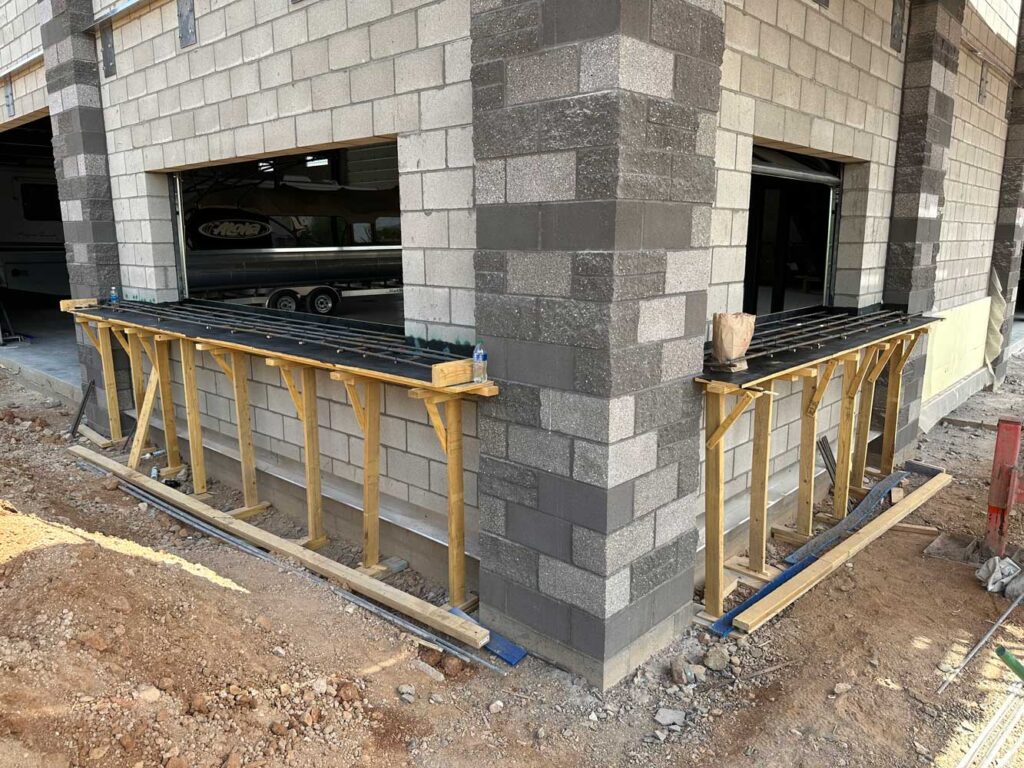
Compare common masonry materials and understand how color, texture, mortar and architectural style affect the final result.
What Masonry Materials Can Be Used?
Masonry projects may use clay brick, concrete masonry units, natural stone, manufactured stone, concrete and mortar. The best material depends on the intended function, design, existing property and environmental exposure.
What Is The Difference Between Mortar And Concrete?
Mortar is used primarily to bond masonry units and form joints, while concrete is commonly used for slabs, foundations and structural elements. Their mixtures and performance requirements differ, so they are not interchangeable.
Can Brick, Block And Stone Be Combined?
Yes. Multiple masonry materials may be combined when their proportions, colors, textures and construction requirements are planned together. The design should feel intentional rather than visually disconnected.
Can New Masonry Match Existing Brick Or Stone?
New masonry can often be coordinated with existing materials. The matching process should consider more than color, including dimensions, texture, pattern, mortar tone and joint profile. Learn more about masonry color matching .
Does Mortar Color Affect The Final Appearance?
Yes. Mortar surrounds every masonry unit and can represent a substantial portion of the visible surface. Light, dark or contrasting mortar can significantly change how brick, block or stone appears.
Is Natural Stone Better Than Manufactured Stone?
Neither material is automatically best for every project. Natural stone provides organic variation, while manufactured stone can offer more controlled shapes and colors. The right choice depends on the application, desired appearance and installation requirements.
Can Masonry Complement Modern Architecture?
Yes. Clean lines, controlled patterns, simplified colors and carefully selected materials can make masonry appropriate for contemporary homes and commercial properties.
Arizona Masonry FAQs
Arizona properties face intense sun, heat, dry conditions and seasonal rain. These questions explain how local conditions may affect masonry construction and maintenance.
How Does Arizona Heat Affect Masonry?
Masonry surfaces can become extremely hot in direct sunlight. Repeated heating and cooling creates material movement, which may make existing weak joints or cracks more visible over time.
Can Monsoon Rain Damage Masonry?
Wind-driven rain can enter open joints, cracks and poorly protected wall areas. Moisture may contribute to staining, mineral deposits and continued deterioration when drainage or mortar joints are already compromised.
Does Soil Movement Affect Masonry Walls?
Changes in supporting soil can place stress on foundations, walls and connected masonry features. Stair-step cracking, separation or wall movement should be evaluated before the surface is repaired.
How Often Should Exterior Masonry Be Inspected?
Property owners should periodically review exterior masonry and inspect it after significant weather, impact or nearby construction. Look for cracks, loose units, missing mortar, movement and persistent water staining.
Does Masonry Require Regular Maintenance?
Masonry generally requires limited routine maintenance, but drainage, mortar joints, cracks and surface conditions should not be ignored. Addressing localized defects early may prevent more extensive damage.
Is Masonry Fire Resistant?
Brick, concrete block, stone and mortar are noncombustible materials. The fire performance of a complete wall assembly depends on its materials, thickness, design and construction details.
Is Masonry Energy Efficient?
Masonry has thermal mass, meaning it can absorb and release heat over time. Overall building efficiency also depends on insulation, windows, doors, roof systems, air sealing and the complete wall assembly.
Still Have A Masonry Question?
Contact New Era Masonry to discuss your residential or commercial masonry project, request an evaluation or learn which service may be appropriate for your property.
About US
We at New Era Masonry are committed to excellence in every aspect of our business. We uphold a standard of integrity bound by fairness, honesty, and personal responsibility. Our distinction is the quality of service we bring to our customers.
