
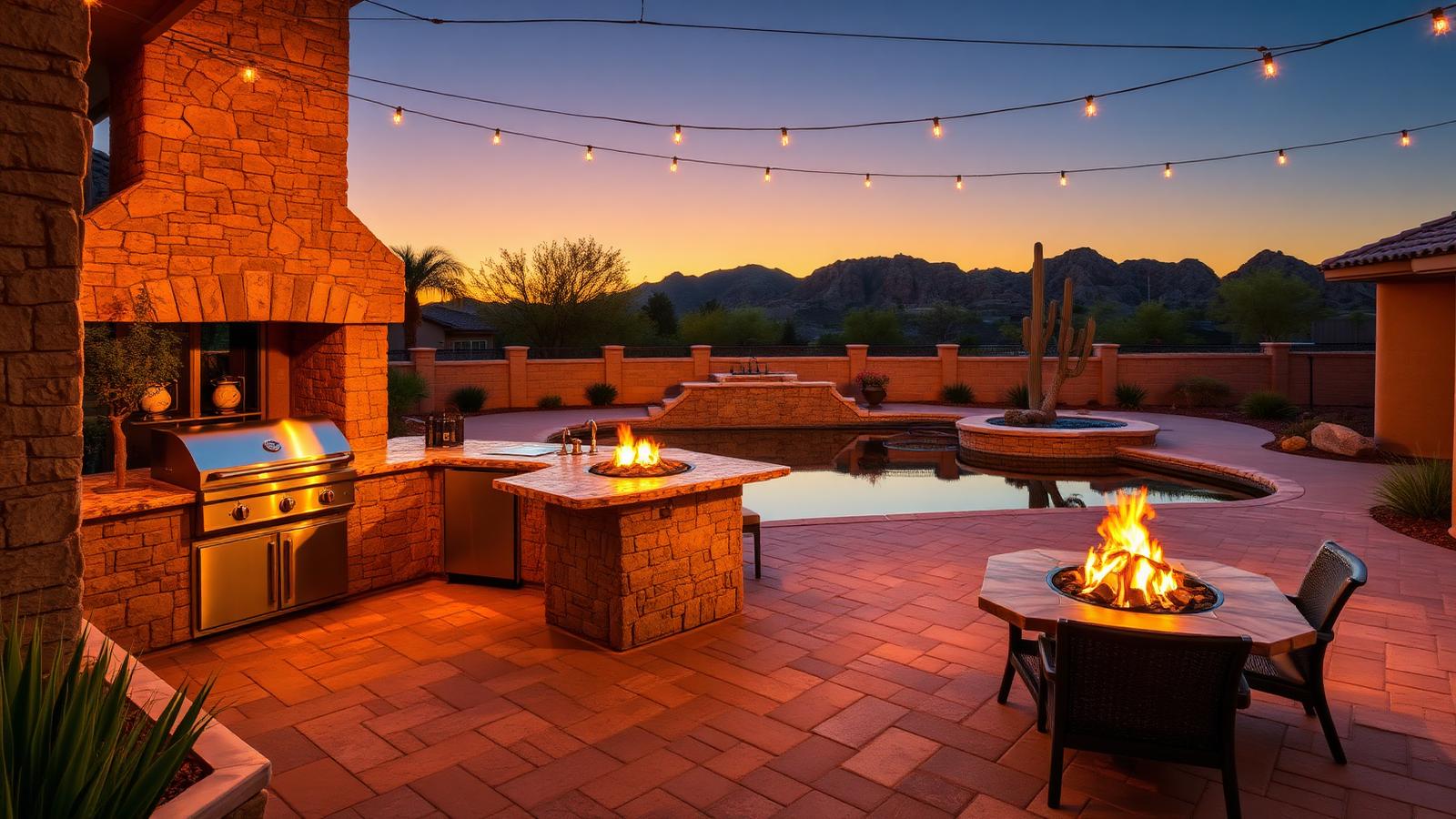
How Phoenix Outdoor Kitchens, BBQ Islands, and Fire Pits Are Built to Survive the Desert
Outdoor living projects in Arizona need more than good design. They need masonry built for heat, monsoon storms, thermal movement, and long-term durability.
Phoenix outdoor living projects have a brutally simple test of quality: they have to look right at 105°F in June, take a direct microburst in August, then hold up to a January cold snap that drops 50°F in 12 hours.
Most of the cracked BBQ islands and crumbling fire pits we get called to repair across Phoenix, Gilbert, and Scottsdale were not built badly. They were built like outdoor kitchens in Dallas or San Diego, where the climate is gentler.
After three generations of Valley masonry, here is how New Era Masonry actually builds outdoor kitchens, BBQ islands, fire pits, and hardscape that survive Phoenix — and what we tell homeowners before they choose a Pinterest design. For more on our full capabilities, explore our masonry services and custom masonry work.
Why Most Phoenix BBQ Islands Fail Within 5 Years
When we tear out a failed island, it is almost always one of four problems. These failures usually start inside the structure long before the homeowner sees cracking, loose veneer, or movement.
No Separate Footing
Built on a 4-inch slab with no separate footing. The slab moves seasonally and the veneer cracks along the same horizontal line every time.
Wood Frame Inside
Wood-framed structures with stucco skins can be damaged by termites and monsoon humidity inside the masonry box within 6–8 years.
Wrong Countertop System
Porcelain or ceramic tile countertops installed without a thermal break often crack during the first serious Phoenix summer.
Cheap Veneer Install
Stone veneer installed with mastic instead of polymer-modified mortar can start popping off after monsoon moisture gets behind it.
New Era Masonry standard: A properly built outdoor kitchen in Phoenix is a masonry assembly — real CMU frame, real footing, real mortar, real flashing. It costs more upfront and is built to last.
BBQ Islands: The New Era Build Spec for Phoenix
A 10-foot L-shape island with a built-in grill, side burner, refrigerator cutout, and bar overhang is one of our most-requested outdoor living builds. Here is what goes into one that lasts in Arizona conditions.
Footing
12-inch wide × 12-inch deep concrete footing with #4 rebar, isolated from the patio slab.
CMU Frame
8-inch CMU block, fully grouted in cells with vertical rebar every 32 inches.
Utility Chases
Cast in during the block lay, not core-drilled after the island is already built.
Stone Veneer
Natural stone or manufactured stone over polymer-modified mortar, with weep screed at the base.
Countertop
2-inch honed granite, leathered quartzite, or board-formed concrete with integral color — not porcelain tile.
Sealer
UV-stable, food-safe penetrating sealer rated for 110°F+ Phoenix conditions.
Typical Phoenix cost range for an island built this way: $9,500–$22,000, depending on size, appliances, layout, and stone selection.
Fire Pits: Gas vs. Wood, and What Code Actually Requires
Maricopa County allows residential gas fire pits with relatively few restrictions, while wood-burning pits have setback and air-quality limits that change during no-burn days. For 9 out of 10 Phoenix backyards, we recommend a 36–48 inch round or square gas fire pit designed as a proper masonry feature.
Burner System
Lava rock or fire glass over a stainless steel burner pan with proper drainage — not a generic kit out of a box.
Gas Line
A buried, code-compliant gas line on its own shut-off, sleeved where it passes under hardscape.
Masonry Base
A masonry surround built on its own footing instead of floating on pavers.
Ventilation
A vented base, because trapped LP gas is one of the most common causes of fire pit explosions in the Valley.
For wood-burning pits, homeowners also need 8–10 feet of horizontal clearance from any structure, a non-combustible apron, and awareness of the Maricopa County no-burn calendar during high-pollution advisory months.
“A fire pit looks like a weekend DIY. The gas line, the airflow, and the footing are not. We get called out two or three times every November to fix pits homeowners built in April — usually after a guest got hurt.”
— New Era Masonry
Hardscape: Pavers, Flagstone, and Slab Choices for Phoenix
Surface temperature is the unspoken issue in every Phoenix outdoor kitchen project. A dark concrete paver in direct June sun can easily exceed 165°F — hot enough to burn bare feet in seconds. New Era Masonry helps homeowners choose materials based on reflectivity, thermal mass, use area, and long-term comfort.
| Surface | Approx. Peak Surface Temp in June AZ Sun | Best Use |
|---|---|---|
| Light travertine | ~125°F | Pool decks, kitchen aprons, barefoot zones |
| Light flagstone | ~135°F | Patios, transitions, dining areas |
| Light concrete pavers | ~150°F | High-traffic walkways and perimeter areas |
| Dark pavers or standard concrete | 160–175°F | Driveways or shaded areas only |
Permits, Gas, and Electrical: What Triggers an Inspection in Phoenix
A pure-masonry BBQ island under 30 inches tall with no utilities usually does not require a permit in many Valley jurisdictions. Once utilities, structures, or taller walls are involved, permitting becomes much more likely.
Gas line, natural gas, or LP: Usually requires a mechanical or plumbing permit.
120V or 240V electrical: Outlets, refrigerators, lighting, and appliance power usually trigger an electrical permit.
Roof structure or attached cover: Usually requires a building permit.
Wall over 3 feet tall integrated into the build: May require structural review depending on the city.
Important: If a contractor tells you “we do not need permits in Arizona,” walk away. Skipping required permits can affect homeowner’s insurance, safety, future inspections, and resale.
A licensed masonry contractor should understand how these requirements apply across Phoenix, Gilbert, Mesa, Chandler, Scottsdale, Tempe, Queen Creek, and the wider East Valley. You can also view our service areas to see where New Era Masonry works.
Why a 3rd-Generation Phoenix Mason Matters for Outdoor Living
Outdoor kitchens and fire features often fail at the joint where masonry meets non-masonry: the grill cutout, countertop seam, gas penetration, veneer-to-slab transition, or utility chase. These details are where long-term durability is either built in or missed completely.
“The reason our 15-year-old outdoor kitchens still look new is detailing. Flashing where the slab meets the island. Backer rod and elastomeric sealant at the countertop seam. Real weep screeds. None of it is visible — all of it is why the thing lasts.”
— New Era Masonry
A general handyman or landscape installer may understand the surface-level look of an outdoor kitchen. A generational mason understands the hidden joints, expansion points, footing details, material transitions, and water management systems that keep the project together for decades.
Our Outdoor Living Build Process
Every custom masonry project is different, but durable outdoor living work should follow a clear process from first walkthrough to final detail.
Site Review and Design Goals
We review the existing patio, grades, access, utilities, shade exposure, cooking needs, seating goals, and long-term use of the outdoor space.
Structure, Footing, and Utility Planning
Before finishes are selected, we plan the masonry structure, footing, rebar, drainage, utility chases, gas line path, and electrical requirements.
Material Selection for Phoenix Conditions
We help homeowners choose stone, veneer, countertops, pavers, and fire feature finishes that can handle Arizona heat, UV exposure, and monsoon moisture.
Permitting and Coordination
When gas, electrical, roof structures, or structural walls are involved, we coordinate the correct permitting conversation before construction begins.
Masonry Construction and Detailing
The project is built with proper CMU, mortar, flashing, weep screeds, expansion details, countertop support, and utility integration.
Final Sealing and Walkthrough
We review the finished project, apply appropriate sealers where needed, and walk the homeowner through care, maintenance, and seasonal considerations.
Frequently Asked Questions
How much does a custom BBQ island cost in Phoenix in 2026?
A basic 6-foot straight island with a built-in grill typically ranges from $6,500–$9,500. A standard 10-foot L-shape with grill, side burner, fridge, and overhang often ranges from $12,000–$18,000. A full luxury outdoor kitchen with a pizza oven, sink, and high-end veneer can range from $25,000–$60,000+.
Can you build a BBQ island over an existing patio?
Sometimes, but only if the existing slab is 4 inches or thicker, has a thickened edge, and shows no visible cracking. In many cases, cutting through the slab and pouring a dedicated footing is the better long-term solution.
Are gas fire pits safe to leave on a covered patio?
They can be safe if the patio has open sides, adequate ventilation, and proper vertical clearance. Fully enclosed patios or ramadas require properly rated appliances and careful code-compliant design.
What is the best stone veneer for Phoenix sun?
Natural stone such as limestone, travertine, sandstone, and Arizona flagstone generally performs very well in UV exposure. If choosing manufactured stone, look for a through-color product rather than a surface-painted option.
Do I need a permit to add an outdoor kitchen?
Pure masonry without utilities usually may not require a permit. Once gas, electrical, plumbing, roofing, or certain structural elements are involved, permits are usually required. Phoenix, Gilbert, Mesa, Chandler, and Scottsdale can each have different thresholds.
How long does a custom outdoor kitchen or fire pit build take?
A standard BBQ island usually takes 2–3 weeks from design to final inspection. A full outdoor kitchen with utilities may take 4–7 weeks. During June through August, monsoon storm days can affect scheduling.
Get a Free On-Site Estimate from New Era Masonry
Three generations of Phoenix masonry experience. Licensed, bonded, and insured. New Era Masonry builds outdoor kitchens, BBQ islands, fire pits, stonework, hardscape, and custom masonry throughout Phoenix, Gilbert, Mesa, Chandler, Scottsdale, Tempe, Queen Creek, and the East Valley.
Have more questions? Visit our FAQ page or browse more masonry tips on our blog.
Request a Free Estimate Explore Custom Masonry