
Monsoon Masonry Damage in Phoenix: How Summer Storms Crack Block Walls
Wind-driven rain, saturated soils, and 60-mph gusts turn small mortar gaps into structural problems fast. Here is how to spot monsoon damage early, when to repair vs. replace, and how to seal block and brick walls before the next storm rolls through the Valley.
In This Guide
- How monsoon storms actually damage Phoenix masonry
- 6 warning signs to look for after a storm
- Damage severity: cosmetic, structural, or emergency
- Pre-monsoon waterproofing checklist
- When to call for emergency repair
- Why homeowners and property managers call New Era Masonry
- FAQ
How Monsoon Storms Actually Damage Phoenix Masonry
The Arizona monsoon — roughly June 15 through September 30 — does not behave like a normal rainy season. Storm cells dump one to three inches of rain in under an hour, push 50–70 mph microburst winds sideways into walls, and then leave saturated soil to bake at 110°F the next afternoon. That cycle is uniquely hard on block, brick, and stone.
Four mechanisms cause most of the damage we see at New Era Masonry every July and August. If your wall is already cracked, leaning, or missing caps, you can review our masonry services or request help through our contact page.
Wind-Driven Rain
Sideways rain forces water into hairline mortar cracks that vertical rain would never reach. Once water is behind the face shell of a CMU block, evaporation pushes salts outward as efflorescence.
Saturated Soils
Caliche and clay soils across the Valley swell when wet and shrink as they dry. Footings move, and the rigid wall above telegraphs that movement as stair-step cracks.
Mortar Washout
Older lime-based mortar joints, especially on pre-1995 walls, erode quickly under repeated heavy rain. Once a joint is too deep, water reaches the block core and rebar.
Cap and Coping Failure
Loose wall caps are one of the biggest sources of monsoon damage. A displaced cap lets water pour straight into the hollow cells of every block below it.
“The biggest mistake homeowners make after a monsoon is waiting. Small mortar gaps are inexpensive to seal early, but once water reaches the block core or footing, the repair becomes much more involved.”
— New Era Masonry
6 Warning Signs to Look For After a Storm
Walk your property within 48 hours of a major storm. Most monsoon damage is cheap to fix in the first week and expensive to fix a year later.
Stair-Step Cracks at Corners
Diagonal cracks that follow the mortar joints usually mean footing movement, not just cosmetic shrinkage.
Displaced or Missing Wall Caps
Look for caps that shifted, cracked, or are sitting on visible mortar gaps.
Leaning or Bowed Sections
Sight down the top of a long wall run. Anything more than 1 inch out of plumb over 8 feet needs a professional look.
White Staining
Powdery white deposits, known as efflorescence, mean water moved through the wall and evaporated. It is not structural on its own, but it is a water-intrusion signal.
Mortar Washout
Run a screwdriver along joints. If it sinks more than 1/4 inch, the joint needs tuck-pointing before the next storm.
Water Staining at Weep Holes or Block Bases
Dark moisture lines hours or days after rain mean water is trapped inside the wall.
Damage Severity: What Can Wait, What Cannot
Not every crack is an emergency, and not every cosmetic stain is harmless. Use the table below to triage monsoon masonry damage.
| Severity | What You See | Response Window | Typical Repair |
|---|---|---|---|
| Cosmetic | Hairline cracks under 1/16 inch, efflorescence, surface stains | 30–90 days | Clean, seal, monitor |
| Moderate | Stair-step cracks 1/16–1/4 inch, mortar washout, displaced caps | 2–4 weeks | Tuck-point, reset caps, waterproof |
| Structural | Cracks over 1/4 inch, visible separation, mild lean | 5–10 days | Rebuild affected courses, inject epoxy, re-anchor |
| Emergency | Leaning over 2 inches, exposed rebar, footing separation | Same day | Shore wall, partial demo and rebuild |
Not sure what you are looking at? Send a photo. New Era Masonry responds to monsoon repair inquiries within one business day, and most homeowners get a written estimate within 48 hours. You can also view real examples of our block wall, stone, and restoration work in our masonry gallery.
Pre-Monsoon Waterproofing Checklist
Sealing a block wall before the rain hits costs a fraction of repairing one after. Run through this checklist in May or early June every year.
| Task | DIY or Pro | Frequency |
|---|---|---|
| Apply masonry sealer to block and brick faces | DIY for small walls / Pro for long runs | Every 3–5 years |
| Tuck-point eroded mortar joints | Pro | As needed |
| Reset or re-mortar wall caps | Pro | Every 5–10 years |
| Clear weep holes at wall base | DIY | Annually |
| Re-caulk expansion joints | DIY / Pro | Every 2–3 years |
| Re-grade soil away from wall footings | DIY | Annually |
| Inspect and reseal stucco-clad masonry | Pro | Every 5–7 years |
A quality silane-siloxane sealer on a clean, dry CMU wall typically holds up 4–6 years in full Phoenix sun. Cheaper acrylic sealers can fail quickly and trap moisture, which is worse than no sealer at all.
When to Call for Emergency Repair
Stop and call a licensed masonry contractor the same day if you see any of the following:
- A wall section leaning more than 2 inches out of plumb
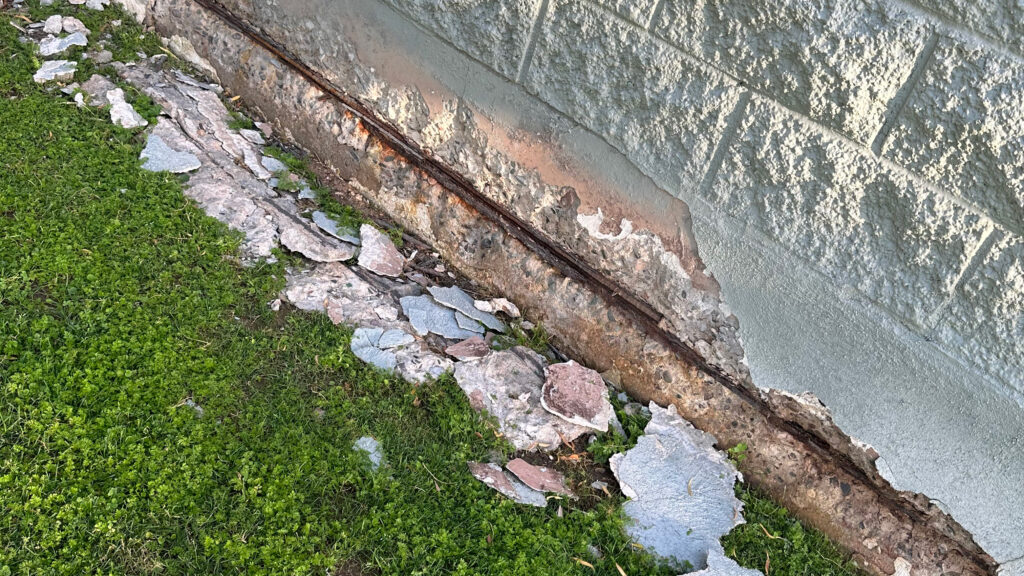
- Exposed or rusting rebar at any crack or break
- Visible separation between the wall and its footing
- A cap or cap stones that fell during the storm
- Any wall along a pool, sidewalk, driveway, or shared property line that a neighbor or pedestrian could lean against
Leaning walls do not stabilize on their own. Once the footing has shifted and the wall is out of plumb, gravity and the next storm finish the job.
Why Phoenix Homeowners and Property Managers Call New Era Masonry
New Era Masonry is a Phoenix-based, licensed and bonded masonry contractor handling both residential and commercial work across the Valley — block walls, brick, stone veneer, restoration, and full rebuilds. Monsoon repair is the busiest part of our calendar from late June through September, and we staff for it.
- Licensed, bonded, and insured for both residential and commercial masonry
- Same-day response on emergency repair calls during monsoon season
- Written estimates within 48 hours, with clear scope and material specs
- Workmanship warranty on all repair and restoration work
See examples of our block wall, stone, and restoration projects in our masonry gallery, explore our full masonry services, or learn where we work on our service areas page.
Frequently Asked Questions
Does homeowners insurance cover monsoon masonry damage?
Usually yes for sudden storm damage, such as a falling tree, wind-driven debris, or a microburst that topples a wall. It usually does not cover gradual deterioration or unaddressed cracks. Document damage with timestamped photos before and after the storm. New Era Masonry provides insurance-ready written estimates.
How fast should I repair a new crack?
Hairline cracks can wait through the season if sealed. Anything wider than 1/16 inch should be addressed before the next storm because water in the joint accelerates damage each rain cycle.
Can I seal a block wall myself?
Yes, for short walls in good condition. Use a penetrating silane-siloxane sealer, not an acrylic surface coating, and apply only to a clean, dry wall when temperatures are below 95°F. For walls over 60 feet, or any wall with existing cracks or efflorescence, hire a professional.
How long does waterproofing last in Arizona sun?
A professional-grade penetrating sealer often holds up 4–6 years on block and 5–8 years on brick under full Phoenix sun. North-facing and shaded walls usually last longer.
What does emergency masonry repair cost in Phoenix?
Minor tuck-pointing and cap resets typically start around $400–$900. Rebuilding a leaning 8-foot section may run $1,200–$3,500 depending on access and finish. Full property-line wall replacements are quoted by linear foot after a site visit. Every emergency call starts with a written estimate.
Storm Damage on Your Wall? Need a Pre-Monsoon Inspection?
New Era Masonry serves Phoenix, Scottsdale, Mesa, Glendale, Peoria, Surprise, and the surrounding Valley. Licensed, bonded, and insured.
Call (623) 233-8345, visit our contact page, or browse examples of our work in the masonry gallery.
Request a Masonry Estimate See Our Work