
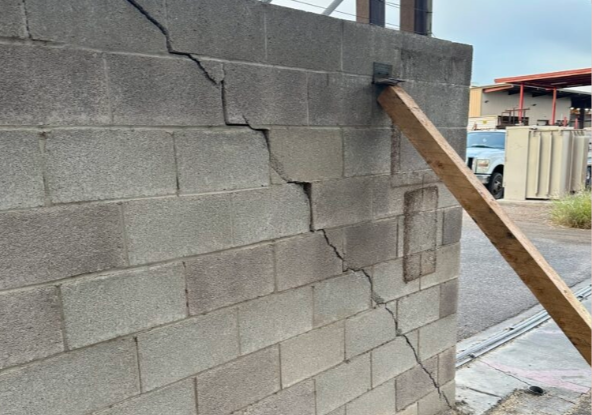
Phoenix Block Wall Repair Costs: Cracks, Leaning Walls, and Monsoon Damage Explained
Arizona monsoon season officially starts June 15. Over the next ten weeks, block walls across the Valley take a beating from downbursts, sudden soil saturation, and extreme heat. The walls that crack in August almost always showed warning signs in June.
In This Guide
- Why Phoenix block walls crack in the first place
- The 5 block wall damage patterns we see most
- DIY vs. contractor repair guidelines
- Block wall repair methods explained
- 2026 Phoenix block wall repair cost ranges
- Pre-monsoon inspection checklist
- How to choose a Phoenix block wall contractor
Already see damage? Skim the New Era Masonry project gallery for before-and-after block wall repairs across the Phoenix metro, then jump to the cost section below. You can also request help through our contact page.
Why Phoenix Block Walls Crack in the First Place
Block walls fail for predictable reasons in Arizona. Knowing which one is hitting your wall determines whether the repair lasts six months or sixty years.
Expansive Desert Soil
Much of the Valley sits on clay-heavy soil that swells when wet and shrinks when dry. That cycle slowly pushes footings out of level and creates settlement cracks.
Thermal Expansion
A west-facing block wall in Phoenix can reach extreme surface temperatures. Without proper control joints, CMU relieves expansion stress through vertical cracking.
Water Intrusion
Concrete block is porous. Monsoon water carries salts to the surface, softens mortar from within, and accelerates spalling if the wall is not sealed correctly.
Failed Footings
Older property-line walls were often built on minimal footings. A leaning wall almost always means the footing is the real problem, not just the block above it.
The 5 Damage Patterns We See Most
If you can identify which pattern you are looking at, you can have a better conversation with any contractor and quickly spot when someone is overselling the repair.
| Damage Pattern | Most Common Cause | Severity | Typical Repair |
|---|---|---|---|
| Hairline vertical cracks | Thermal expansion, minor settling | Low — cosmetic | Tuckpointing plus flexible sealant |
| Step cracks through mortar joints | Differential settlement, monsoon soil saturation | Moderate — monitor | Mortar removal, repointing, joint reinforcement |
| Horizontal cracks | Soil pressure or footing failure | High — structural | Helical anchors, wall stitching, or partial rebuild |
| Leaning or out-of-plumb sections | Saturated soil plus undersized footing | High — safety risk | Brace, remove leaning course, rebuild on new footing |
| Crumbling, spalling, or efflorescent block | Water intrusion, old block, poor drainage | Moderate to high | Replace block, correct drainage, seal wall |
Red flag: Any horizontal crack, even a thin one, is the wall telling you it may be failing in shear. Get it looked at within the week, not the season. These are the cracks that can turn into collapsed walls during a storm.
DIY vs. Contractor: Where the Line Really Is
Homeowners can handle the cosmetic end of block wall maintenance. What you should not DIY is anything load-bearing or anything where misdiagnosing the cause lets the damage come right back.
| Task | DIY-Friendly | Call a Contractor |
|---|---|---|
| Sealing a hairline crack under 1/16 inch | Yes — polyurethane sealant | — |
| Repointing a few mortar joints | Maybe — if you own a grinder and tuck-pointing tools | If cracks recur within a season |
| Replacing 1–2 spalled blocks mid-wall | No — load path must be supported | Yes |
| Step cracks across multiple courses | No | Yes — diagnose the cause first |
| Any wall leaning more than 1 inch off plumb | No — life-safety issue | Yes, immediately |
| Horizontal cracks of any length | No | Yes — engineer plus masonry contractor |
| Painting or sealing for waterproofing | Yes — use vapor-permeable masonry sealer | If efflorescence keeps returning |
Repair Methods Explained
Tuckpointing
The old, failing mortar is ground out to about 3/4 inch and replaced with fresh mortar matched to the original color and strength. Done correctly, repointed joints can outlast the surrounding block.
Block Replacement
Damaged blocks are cut out individually, the cavity is cleaned, and a new block is mortared in place. Color matching matters, and sealing afterward is strongly recommended.
Wall Stitching or Helical Anchors
Stainless steel helical ties are installed across active cracks and bedded in high-strength grout. The wall is effectively re-knit so cracks do not open back up at the same joints.
Partial Rebuild
The top one to three courses, or a single damaged section, are taken down and rebuilt. This is common after sun damage, leaning caps, or vehicle impact.
Full Rebuild With New Footing
The wall comes down to grade, a properly sized footing is poured, and the wall is rebuilt to current standards. This is what a leaning wall almost always needs for a long-term fix.
What Block Wall Repair Costs in the Phoenix Metro
These are real 2026 ranges, not lowball teasers. The bottom of each range assumes good access and no surprises. The top accounts for tight access, color matching, stucco overlay, or drainage corrections.
| Repair Type | Typical Phoenix Range | Notes |
|---|---|---|
| Crack sealing and tuckpointing | $8 – $20 / linear ft | Minimum service call usually $250–$400 |
| Block replacement, per in-field block | $45 – $90 / block | Includes mortar, cleanup, and color match |
| Wall stitching or helical ties | $60 – $140 / linear ft | For active step or horizontal cracks |
| Partial rebuild, top 1–3 courses | $45 – $95 / linear ft | Common for sun-damaged or leaning caps |
| Full tear-down and rebuild with new footing | $95 – $180 / linear ft | 6 ft property-line wall, standard CMU |
| Stucco patch over block repair | $6 – $12 / sq ft | Add to structural repair as needed |
| Drainage or weep correction | $400 – $1,500 flat | Often required to stop crack recurrence |
Pricing varies by site access, wall height, finish, and the time of year. A written, itemized quote from a licensed Arizona masonry contractor is the only number that matters for your project.
Pre-Monsoon Inspection Checklist
Run this walk-around before storms peak in late July and August. Twenty minutes today can save you from an emergency call in 110°F heat.
- Walk the full length of every block wall — yard, side, and shared property lines.
- Look for new cracks since last summer; mark hairline cracks with a pencil and date to track movement.
- Sight down the top of the wall — visible lean, dip, or wave means call a pro before storms hit.
- Check the base of the wall for white powdery residue, also called efflorescence.
- Inspect mortar joints with a screwdriver. If the tip digs in more than 1/4 inch, the joint needs repointing.
- Clear soil, mulch, and irrigation lines back at least 12 inches from the wall.
- Verify grade slopes away from the wall on both sides.
- Photograph anything questionable so you have a baseline after the first monsoon storm.
Need a second opinion? Send a few photos of the cracks or lean to the New Era Masonry team. We diagnose walls across the Valley every week and can usually tell you in one reply whether it is a watch-it, fix-it-now, or rebuild situation. See completed work in our masonry gallery.
How to Choose a Phoenix Block Wall Contractor
Block wall work attracts unlicensed labor in Arizona because the materials are cheap and the job looks simple. The repairs that fail within a year are usually the ones where someone skipped one of the steps below.
- Verify the AZ ROC license. Look up the contractor at azroc.gov. Masonry work may fall under CR-13 or KB-1/KB-2 depending on scope.
- Confirm general liability insurance. Ask for a current certificate of insurance, not just a verbal assurance.
- Get three local references. Ideally, ask for projects that are at least two years old so you can see how the repair held up through monsoon cycles.
- Demand an itemized written scope. Line items should cover demo, materials, footing work, repair method, and finish.
- Insist on a workmanship warranty. One year on tuckpointing and two-plus years on structural repairs or rebuilds is reasonable in the Phoenix market.
Two Ways to Get Started
Send Photos for a Quick Diagnosis
Text or email wide shots of the wall plus close-ups of the crack. We will tell you what we see for free and whether it warrants an in-person visit.
Schedule an On-Site Assessment
For leaning walls, horizontal cracks, or anything you are losing sleep over, an on-site visit is the right call. We measure plumb, inspect the footing where accessible, and provide a written quote.
Need Block Wall Repair Before Monsoon Season Peaks?
New Era Masonry serves Phoenix, Scottsdale, Mesa, Glendale, Peoria, Surprise, and the surrounding Valley. Licensed, bonded, and insured.
Call (623) 233-8345, visit our contact page, or browse examples of completed block wall repairs in the masonry gallery.
Request a Masonry Estimate See Our Work