
Stucco Repair in Phoenix: Signs, Costs, and Repair Options (2026)
A practical guide to Phoenix stucco damage, warning signs, repair methods, re-stucco decisions, project timelines, and fair 2026 cost ranges.
Phoenix Stucco Repair Guide: What This Article Covers
- What stucco actually is
- Why Phoenix destroys stucco faster than most climates
- Seven signs your home needs stucco repair
- When to repair, recoat, or fully re-stucco
- What a professional stucco repair process includes
- 2026 Phoenix stucco repair cost ranges
- Project timelines and homeowner expectations
Stucco is the most common exterior finish on Phoenix-area homes — and one of the fastest to fail here. The same conditions that make the Valley beautiful (intense UV, wide day-to-night temperature swings, and sudden monsoon downpours) are also brutal on the cement, sand, and lime that make up traditional stucco. Cracks, staining, bulging, and hollow spots aren’t cosmetic annoyances; left alone, they let water into your wall assembly and can turn a $400 fix into a $9,000 tear-off.
This guide walks through what stucco actually is, why it fails faster in Phoenix than almost anywhere else in the country, the seven signs your home needs repair, what the process looks like, and 2026 Phoenix-metro cost ranges so you know what a fair quote should look like.
Important: visible stucco damage is often only the outside symptom. Rusted lath, torn building paper, and wet sheathing can continue spreading behind an intact-looking finish coat.
What Stucco Actually Is
“Stucco” is a catch-all term. In Phoenix you’ll typically run into three systems, and the repair approach depends on which one is on your house:
Traditional 3-Coat Stucco
A scratch coat, brown coat, and finish coat troweled over metal lath and building paper. Durable, breathable, and the standard on most Phoenix homes built through the 1990s.
One-Coat Stucco
A single 3/8″ fiber-reinforced coat over lath, then a color coat. Common on production homes built in the 2000s–2010s. Faster to install, but less forgiving of water intrusion.
Synthetic Stucco (EIFS)
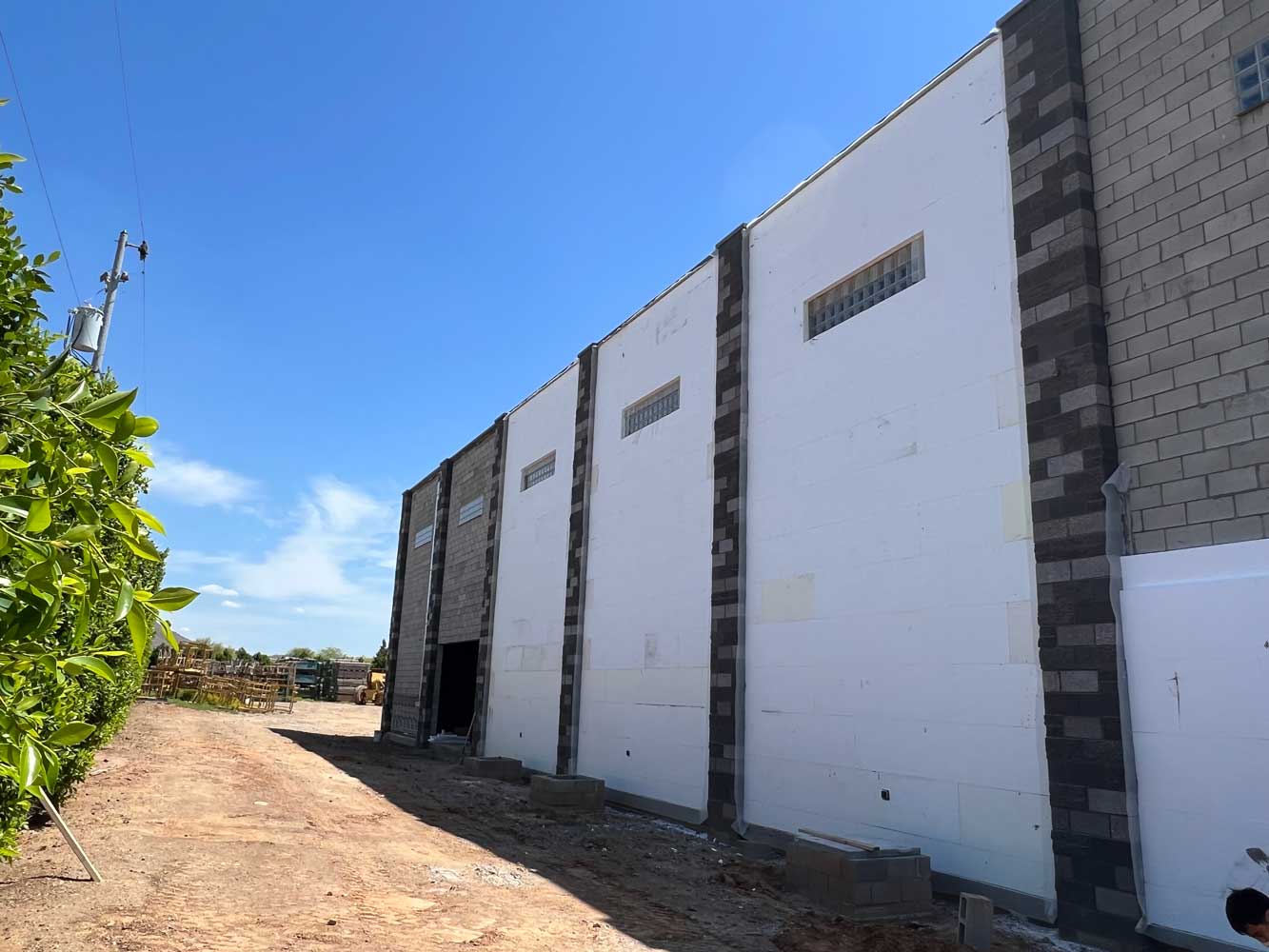
Foam board with a thin acrylic finish. Rare on Phoenix homes but common on commercial buildings. Requires specialized repair — do not patch with regular stucco mix.
Knowing which system you have matters because a repair that looks fine on 3-coat can trap water behind EIFS, and vice versa. New Era Masonry can identify the existing assembly during an on-site stucco inspection.
Why Phoenix Destroys Stucco Faster Than Almost Anywhere
Stucco fails everywhere eventually. In Phoenix, it fails faster because seven forces work against it at the same time:
Foundation Settling
Expansive Valley soils shrink and swell with every wet/dry cycle, transferring stress into the walls above.
Monsoon Water Intrusion
Wind-driven rain hits walls at 40+ mph during storms, forcing water through even hairline cracks.
UV Degradation
300+ sunny days a year break down the acrylic binders in color coats and elastomeric finishes.
Efflorescence
Salts in the stucco (and in Phoenix’s hard water) leach to the surface as white powdery staining.
Improper Flashing
Older homes and rushed production builds often lack proper kick-out flashing where roofs meet walls — a leading cause of hidden water damage.
Thermal Expansion Cracking
A stucco wall in Phoenix can swing from 40°F on a January morning to 160°F surface temp on a July afternoon. That constant expansion and contraction cracks the coat.
Impact Damage
Landscaping, sprinkler overspray, hoses, and kids’ bikes take their toll at the base of walls.
7 Signs You Need Stucco Repair
Some stucco problems are cosmetic. Others are early warnings of water damage inside the wall. Here’s how to tell them apart:
1. Hairline Cracks
Cracks under 1/16″ are almost always cosmetic. Seal them before monsoon season and you’re fine.
2. Diagonal Cracks
Cracks radiating from window or door corners usually point to foundation movement or framing shift — they need investigation, not just patching.
3. Horizontal Cracks
These are more concerning and often indicate a control-joint failure or water pooling at a horizontal break.
4. Bulging or Soft Spots
Push gently on the stucco. If it flexes or feels spongy, the lath behind it is likely rusted through or the sheathing is rotting.
5. Rust or Brown Staining
Metal lath is corroding from water infiltration. This is a repair, not a paint job.
6. Efflorescence
White powder on the surface means water is moving through the wall assembly. It may look cosmetic outside while signaling a moisture problem inside.
7. Exposed Lath or Missing Chunks
This needs immediate repair. The wall is no longer weatherproof and the next monsoon can drive water straight into the framing.
Repair or Full Re-Stucco?
The line between “repair” and “re-stucco” comes down to how much of the finish coat is still doing its job:
Repair Makes Sense When
Damage is under 20% of a wall face, the underlying lath and sheathing are sound, and the existing color coat can be reasonably matched.
Re-Stucco Makes Sense When
Multiple walls show delamination, the lath is rusted in more than one area, the home is over 30 years old and has never been recoated, or you’re already planning a color change and repainting.
Elastomeric Recoat: The Middle Ground
A thick, flexible waterproof coating goes over sound stucco to seal hairline cracks and refresh color. It buys 8–12 years without a full tear-off — as long as the underlying stucco isn’t already failing.
Homeowners can review New Era Masonry’s broader masonry and exterior repair services when comparing localized repairs with larger restoration work.
The Stucco Repair Process — What to Expect
A quality Phoenix stucco repair follows the same sequence whether it’s a 3-foot patch or a wall section:
Inspection and Moisture Testing
A pin or pinless moisture meter identifies where water has migrated behind the surface. Skipping this step is the #1 reason repairs fail within a year.
Cut Back to Sound Material
Damaged stucco is cut out in a clean square, extending 6–12 inches past visible damage into solid coat.
Replace Lath, Paper, and Flashing
If the metal lath is rusted or the building paper is torn, they get replaced before any mud goes back on.
Apply Scratch and Brown Coats
Two base coats are applied and allowed to cure for 24–48 hours each. Phoenix’s low humidity means these have to be kept damp so they don’t cure too fast and crack.
Match the Existing Texture
This is where most repairs fail visually. A skilled mason matches the surrounding texture — lace, sand, dash, or Santa Barbara smooth — by hand.
Finish the Color Coat and Seal
A tinted finish coat or paint blends the patch into the surrounding wall. Elastomeric sealer over the seam extends life.
2026 Phoenix Stucco Repair Cost Ranges
Cost depends on system type, height (single vs. two-story), texture complexity, and whether lath needs replacement. Ranges below reflect what fair Phoenix-metro contractors are quoting in 2026 for typical residential work. Treat them as estimates — not guarantees — and always get an on-site inspection before committing:
| Repair Type | Typical Scope | 2026 Phoenix Cost Range |
|---|---|---|
| Hairline crack sealing | Cosmetic cracks under 1/8″ wide | $150 – $400 |
| Small patch repair | 1–10 sq ft (impact damage, small holes) | $300 – $800 |
| Wall section repair | 10–100 sq ft (water damage, delamination) | $800 – $3,500 |
| Large area repair | 100–400 sq ft (multiple failure points) | $3,500 – $9,000 |
| Full re-stucco (1-story, ~1,800 sqft home) | Tear-off, new lath, 3-coat system, color | $9,000 – $18,000 |
| Full re-stucco (2-story, ~2,800 sqft home) | Tear-off, new lath, 3-coat system, color | $14,000 – $28,000 |
| Elastomeric recoat (whole home) | Flexible waterproof coating over sound stucco | $3,500 – $8,000 |
A few notes on pricing:
- Two-story work adds 25–40% for scaffolding and access.
- Santa Barbara smooth and hand-troweled textures cost more to match than standard lace.
- If your home was built before 1980, budget for potential asbestos testing before any large tear-off.
Timeline and What Homeowners Should Expect
A small patch repair is usually done in one day. A wall section repair takes 3–5 days including cure time between coats. A full re-stucco on a typical single-story Phoenix home runs 10–14 days from tear-off to final color coat. Two considerations that trip up first-time customers:
Curing Weather Matters
Stucco doesn’t like extremes. Summer highs above 105°F force crews to start at dawn and keep coats damp. Winter mornings below 40°F can slow curing. Neither is a dealbreaker — but rushing through a July afternoon pour will crack.
Texture Matching Takes Time
Even a perfect match will look slightly different for the first 30–60 days as the new patch cures to the same color as surrounding wall. Elastomeric or a full-wall paint job hides this seam.
Stucco problems get more expensive every monsoon season you wait. The best repair starts by finding the moisture path, not simply covering the visible crack.
New Era MasonryFrequently Asked Questions
Can I DIY hairline crack repair?
Yes, for cosmetic hairlines under 1/16″ wide. Clean the crack with a brush, apply a paintable elastomeric sealant, and repaint. Anything wider, anything on a two-story wall, or any crack with staining should be looked at by a mason — you’re probably seeing a symptom, not the problem.
Does homeowners insurance cover stucco damage?
Sudden and accidental damage (monsoon impact, a burst pipe behind the wall, a car hitting the house) is typically covered. Gradual failure from age, poor maintenance, or original construction defects is not. Document damage with photos immediately after any storm event and file quickly.
How long does a stucco repair last?
A properly done patch on a sound wall lasts 15–25 years. A full re-stucco with modern acrylic-modified finish coat lasts 30–50 years in Phoenix if it’s inspected and resealed every 8–10 years.
Can you match the color of my existing stucco?
For repairs older than 5 years, an exact match is nearly impossible — UV fades color coats and no two batches cure identically. The two solutions are: paint or elastomeric-coat the entire wall face after repair, or accept a small visual variation that will blend over time. Most Phoenix homeowners choose a full-wall recoat once they see the difference.
When should I re-stucco vs. keep patching?
If you’ve had three or more repairs on the same wall in the last five years, or if repairs are spreading to new walls each monsoon season, you’re past the point where patching pays off. A full re-stucco with new lath and paper resets the clock for a generation.
Get a Free Stucco Inspection from New Era Masonry
Stucco problems get more expensive every monsoon season you wait. New Era Masonry has repaired, patched, and re-stuccoed homes across the Phoenix metro — from single-crack fixes to full tear-offs on two-story homes. We’ll inspect your walls, tell you exactly what’s happening behind the finish coat, and give you a clear scope and honest price.
Request an inspection at New Era Masonry — we’ll walk your property, show you what we find, and put it in writing.
Request a Free Inspection Explore Our Services View Project Gallery