
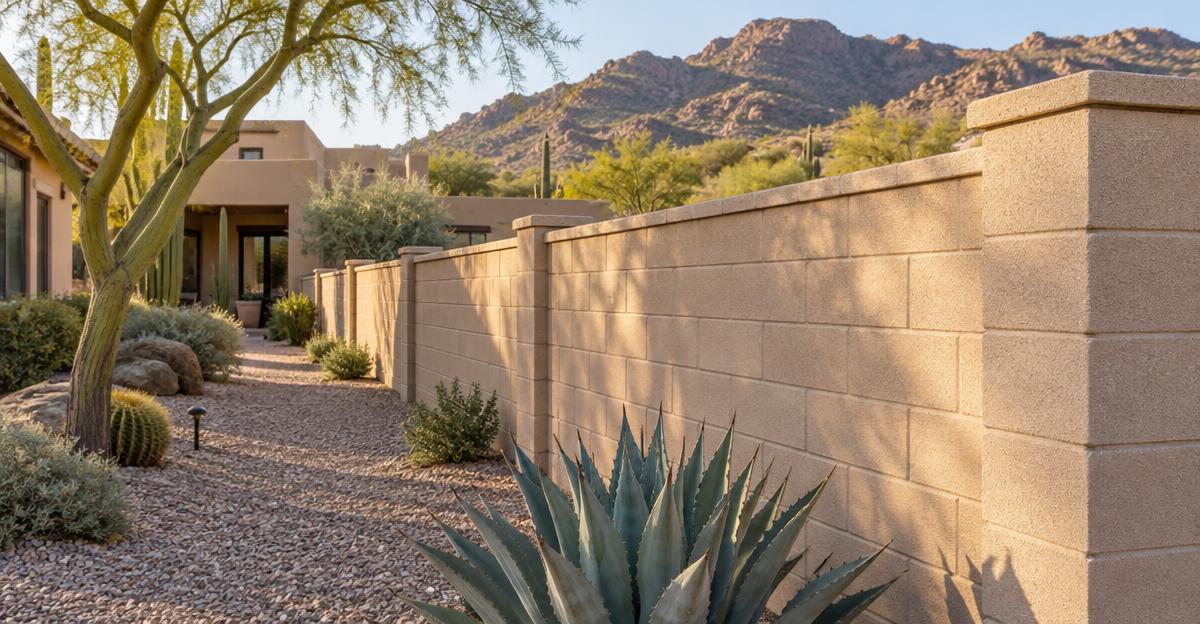
Scottsdale Fence Height Restrictions: Block Wall Guide
Homeowners often assume they can build a wall as high as they want on their own property. That assumption leads to costly teardowns. Understanding Scottsdale fence height restrictions before mixing any mortar protects your budget and keeps your project compliant.
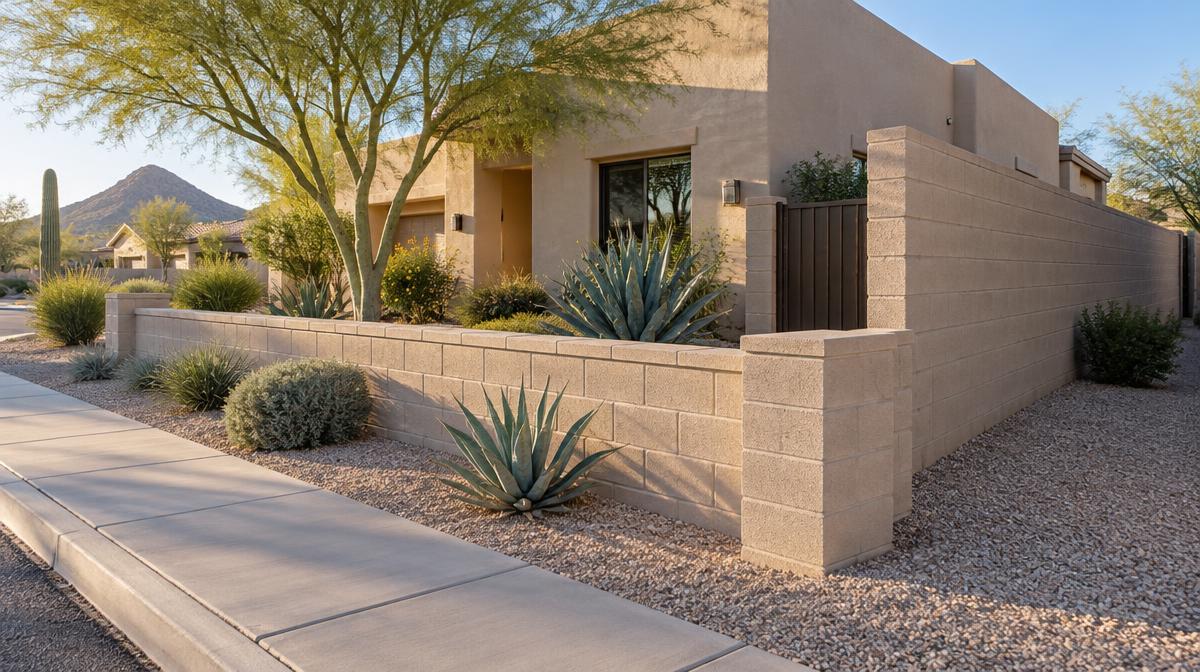
Scottsdale enforces strict zoning rules to maintain neighborhood aesthetics and traffic safety. A block wall built just one foot too high or placed too close to a property line will trigger a city code violation. You will be forced to modify or remove the structure at your own expense.
This guide explains the exact height limits for front and back yards, the engineering required for a backyard privacy wall height upgrade, and the corner lot fence restrictions that keep intersection sightlines clear.
Key Takeaways
- Front yard block walls are strictly capped at 3 feet tall to preserve neighborhood sightlines.
- Backyard privacy walls can reach 6 feet by right, or up to 8 feet with special setbacks and engineering.
- Corner lots face strict sight distance triangle rules that limit walls to 3 feet near intersections.
- Adding new block courses to an existing wall requires a footing inspection and often a structural engineer.
- Homeowner Association (HOA) rules override city guidelines if the HOA enforces a stricter height limit.
Scottsdale Fence Height Restrictions by Yard Area
Scottsdale divides residential lots into distinct zones. The rules change depending on how close the masonry wall is to the street, the side property line, or the rear easement.
Masonry walls in the front yard setback cannot exceed 3 feet in height. This keeps neighborhood streets open and visible.
Behind the front building line of the house, side yard walls can typically go up to 6 feet tall.
Standard zoning allows 6 feet. Heights up to 8 feet are possible if the wall is set back further from the property line and engineered correctly.
Homes backing up to Natural Area Open Space (NAOS) often require view fencing, typically a low block base topped with open wrought iron.
Moving a wall just one foot closer to a street or an alley can trigger entirely different height limits. Property lines and public right-of-way boundaries dictate the allowable design.
Freestanding Block Walls vs. Retaining Walls
The Scottsdale block wall height limit applies differently depending on whether the wall just provides privacy or also holds back dirt.
| Wall Type | What It Is | How Height Is Measured |
|---|---|---|
| Freestanding Wall | Built on level ground to provide privacy or separation | Measured from the adjacent finished grade to the top of the top block |
| Retaining Wall | Engineered to hold back earth where yard elevations differ | Measured from the lowest exposed grade to the top of the retained soil |
| Combined Wall | A retaining wall with a freestanding privacy block wall built on top | The total combined height faces strict caps and requires a permit if the retaining portion exceeds 2 feet |
Homeowners often measure wall height from their own patio. Code enforcement measures from the lowest point on the outside of the wall. If your yard sits higher than the street or your neighbor, your allowable visual height is reduced.
Corner Lot Fence Restrictions and Safety Triangles
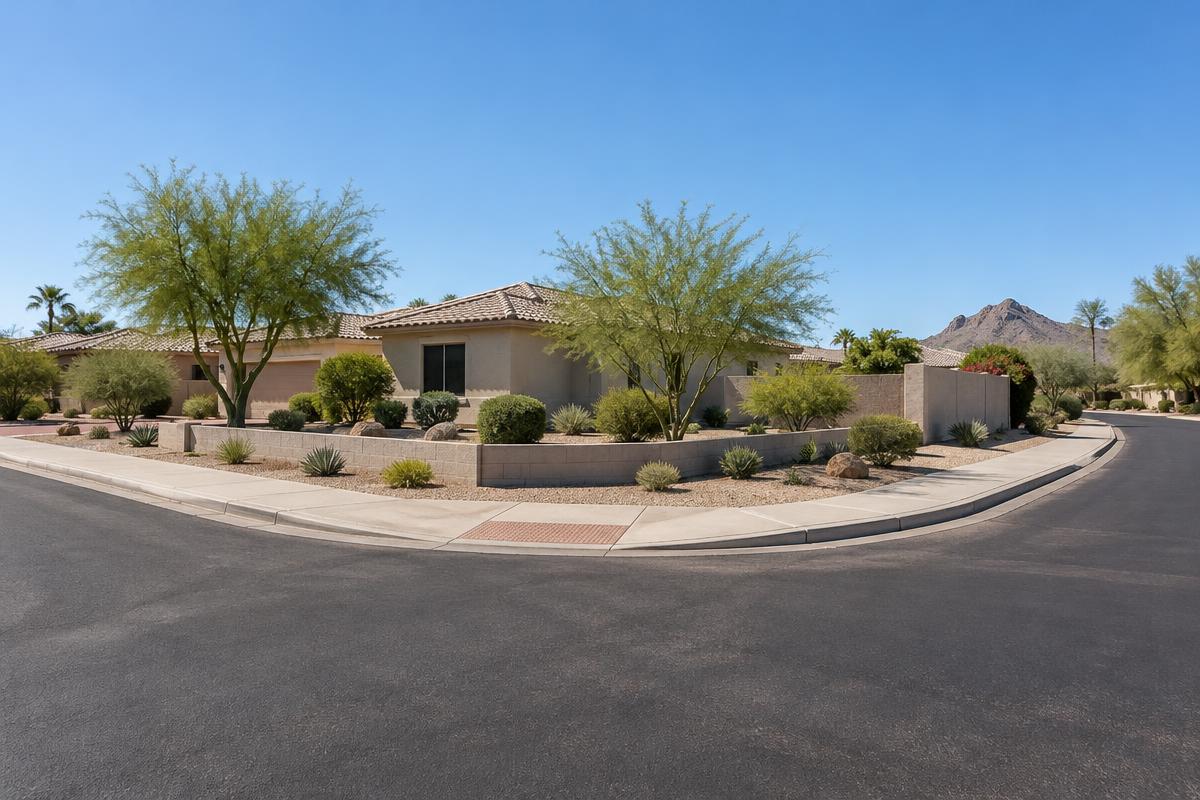
Corner lots have two street frontages. To prevent accidents, Scottsdale requires a clear line of sight for drivers turning corners. You cannot build tall privacy walls right up to the corner of the property.
The Sight Distance Triangle
The city measures a triangle at the corner of intersecting streets. Inside this zone, no wall, column, or gate can exceed 3 feet in height. This ensures drivers can see cross traffic and pedestrians.
Driveway Intersections
The same visibility rule applies where a private driveway meets the street. Block walls flanking a driveway must stay low near the sidewalk connection to prevent backing accidents.
Before designing a wall on a corner lot, you must identify where the city right-of-way ends and your private property actually begins. The sidewalk is rarely the true property line.
Navigating Backyard Privacy Wall Height Upgrades
Many Scottsdale homeowners want to add two or three courses of block to an existing 5-foot wall to block out traffic noise or shield their yard from two-story neighbors. This process is complex.
Adding to Existing Walls
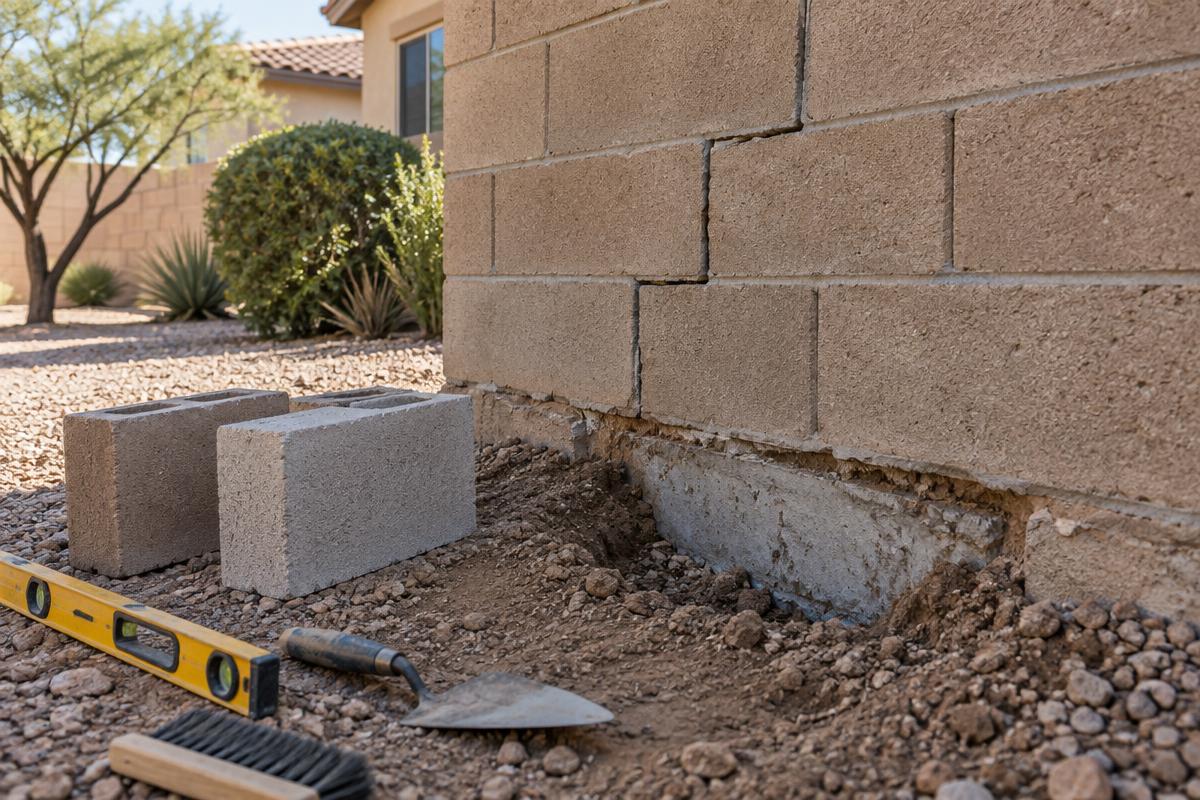
You cannot simply stack new blocks on an old wall. The city requires proof that the underground footing can handle the extra weight and wind load. A structural engineer must evaluate the existing foundation.
If approved, the contractor will core drill down into the existing block, epoxy new steel rebar into the old foundation, and pour solid grout to tie the new courses to the old structure.
Building New Walls
Tearing down a short wall and pouring a new, wider footing is often faster and safer than trying to retrofit an old, undersized foundation for an 8-foot privacy wall.
A new build guarantees correct rebar spacing and proper soil bearing pressure, ensuring the wall survives Arizona monsoon winds.
Any wall reaching 8 feet in height will require stamped plans from an Arizona licensed engineer and a formal city permit.
Permits, Property Lines, and HOA Approvals
Scottsdale requires a building permit for any masonry wall over 3 feet tall, or any wall retaining more than 2 feet of earth.
Always hire a surveyor to mark exact property pins. Block walls built across property lines lead to forced removals and neighbor disputes.
A city permit does not override your HOA. If Scottsdale allows 6 feet but your HOA caps walls at 5 feet, the HOA rule wins.
How Block Wall Extensions Fail
Upgrading a block wall without following local codes and proper masonry practices leads to predictable structural issues.
- Adding height to a wall with a shallow footing causes the entire structure to lean or collapse during a heavy windstorm.
- Solid block walls built without proper weep holes trap landscape runoff, causing hydrostatic pressure to bow the wall outward.
- Unpermitted extensions are easily spotted by city inspectors. Homeowners are routinely forced to tear down unpermitted work at their own expense.
- Using the wrong block texture or failing to match the mortar color on a privacy extension looks unprofessional and lowers property value.
We routinely inspect failing block walls where a previous contractor stacked new block on a footing that was only poured for a 4-foot fence. The foundation cracks under the new weight, and the entire wall has to be replaced.
What to Ask Your Masonry Contractor Before Building
Frequently Asked Questions
What is the maximum Scottsdale block wall height limit?
Front yard walls are generally limited to 3 feet. Backyard walls are allowed up to 6 feet by right. Heights up to 8 feet are permitted in the back yard but require larger setbacks and engineered plans.
Do I need a permit for a masonry fence in Scottsdale?
Yes. Scottsdale requires a building permit for any masonry wall over 3 feet tall or any wall retaining more than 2 feet of earth. This ensures the footing and rebar can handle the structural load.
How do corner lot fence restrictions work?
You cannot build any wall higher than 3 feet inside the sight distance triangle at a street intersection. This keeps the line of sight open so drivers can see cross traffic and pedestrians.
Can I add height to my existing backyard privacy wall?
Yes, but only if the existing footing can support the extra weight. A structural engineer must verify the foundation, and you must stay within the maximum backyard privacy wall height allowed for your specific zoning.
Who is responsible for a block wall on the property line?
Boundary walls are typically the shared responsibility of both property owners. Any modifications, repairs, or height upgrades usually require mutual written agreement and must comply with city codes.
Talk to a Phoenix Area Masonry Contractor About Your Wall
New Era Masonry works throughout Scottsdale, Phoenix, Gilbert, Mesa, Paradise Valley, and surrounding communities. We handle commercial and residential masonry repairs, structural block walls, privacy upgrades, retaining walls, and new construction.
If you need to build a compliant privacy wall, raise an existing block fence, or repair a failing foundation, reach out for a written proposal. Licensed, bonded, and insured, ROC #339091.
Need a Block Wall Built to Code?
New Era Masonry can evaluate your property lines, review the required engineering, and build a masonry wall that meets all Scottsdale regulations and structural standards.
Request a Written Proposal View Masonry RepairsWritten by the New Era Masonry team, an Arizona masonry contractor with more than 40 years of block, brick, stone, and concrete work across three generations of masons.