
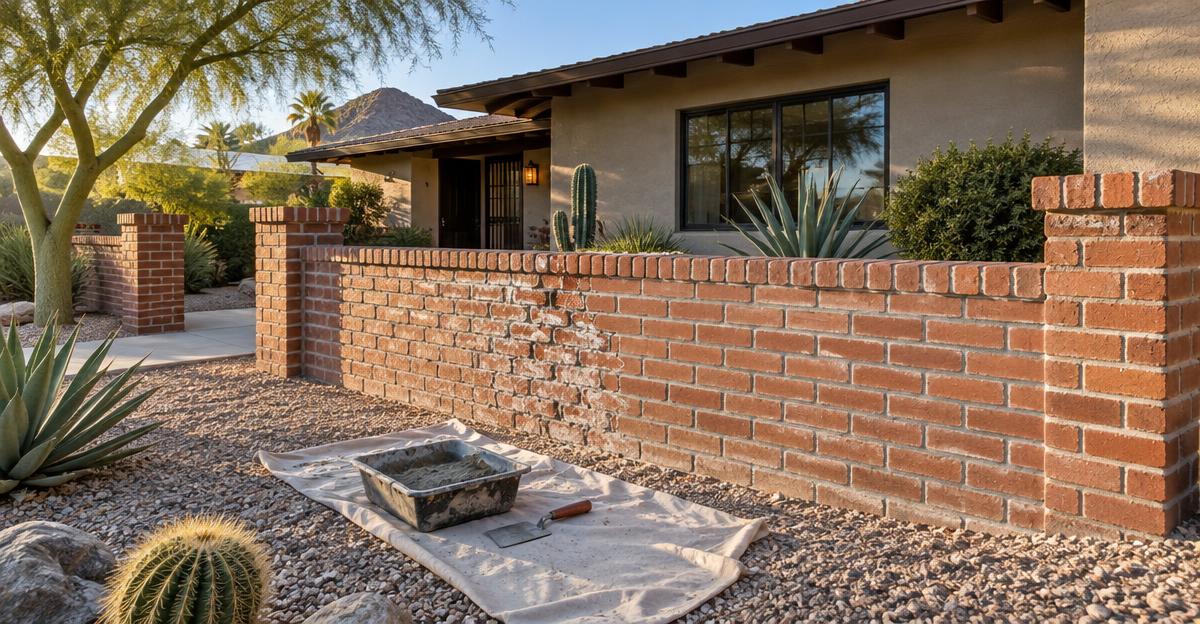
Masonry Tuckpointing in Phoenix, AZ: Signs, Process, and Costs
Mortar joints do not last forever. Sun, wind, and building settlement take their toll on Arizona block and brick walls. Tuckpointing removes the failing mortar and replaces it with fresh material to stop water damage and restore structural integrity before the masonry unit itself fails.
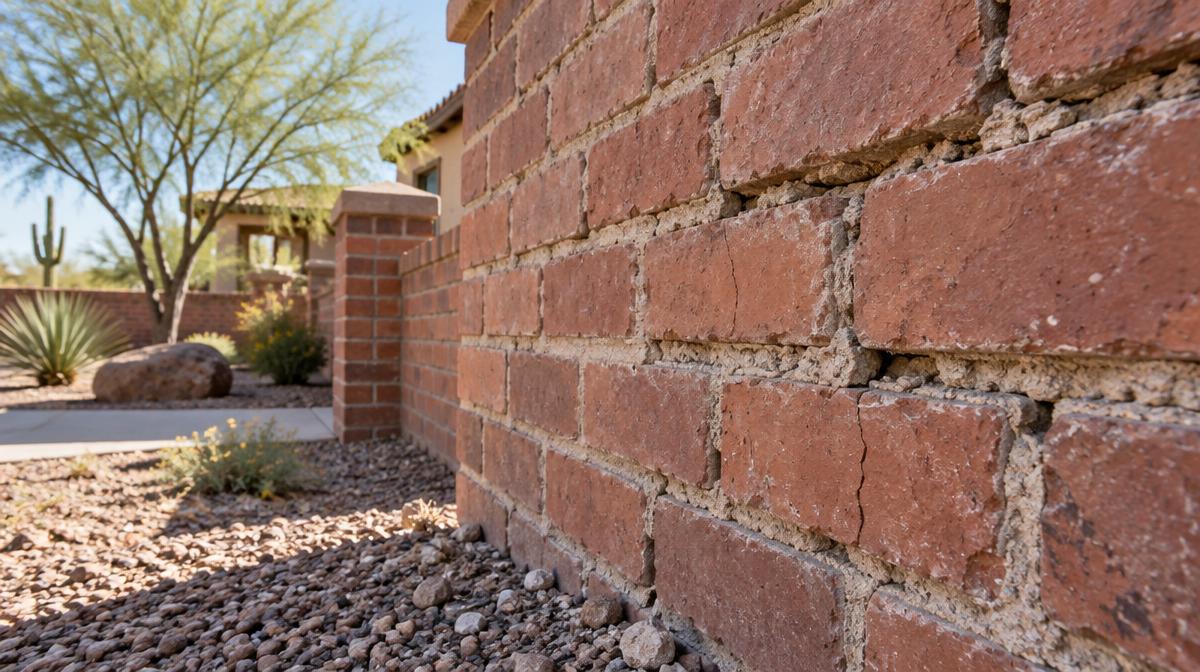
Every block and brick wall relies on mortar to hold it together. When that mortar cracks, crumbles, or recedes, the entire wall is at risk. Proper masonry tuckpointing Phoenix AZ solves this problem by grinding out the damaged layer and packing in compatible new mortar.
This guide explains the signs your wall needs repair, the exact steps professionals take to fix it, how much the work costs, and why addressing bad joints early saves you from replacing the whole wall.
Key Takeaways
- Visible crumbling, cracks, and receded joints are the primary signs your wall needs repair.
- The process requires grinding out old mortar to a depth of 3/4 inch to ensure a proper mechanical bond.
- Costs typically range from $15 to $35 per square foot depending on access, damage severity, and color matching.
- Matching the original mortar color requires custom blending of sand and pigment.
- Ignoring failed mortar forces the stress of wall movement into the brick, causing spalling and structural damage.
Signs Your Mortar Needs Repair
Mortar fails predictably. Knowing what to look for allows you to catch the damage before it spreads into the brick or block units. Inspect your walls yearly for these specific issues.
Mortar that turns to powder when you rub it with a key or finger has lost its structural integrity and needs replacement.
When the joint sits deeply behind the face of the brick, it acts as a shelf that catches rainwater instead of shedding it.
Vertical or horizontal cracks running through the mortar itself indicate settling or thermal movement that has broken the seal.
White powdery efflorescence or damp spots on the wall surface show that water is easily entering through compromised joints.
A compromised joint creates a chain reaction. Once the seal breaks, water enters the wall system. In Arizona, this water heats up, expands, and pushes outward, accelerating the breakdown of the surrounding materials.
Costs for Masonry Tuckpointing in Arizona
Project pricing depends on the severity of the decay, the height of the wall, and the complexity of the color match. Here is what you can expect to pay for professional tuckpointing Phoenix services.
| Project Type | Typical Cost Range | Key Cost Drivers |
|---|---|---|
| Standard Tuckpointing | $15 to $25 per sq. Ft. | Easy ground access, standard gray mortar, and single-story height. |
| Custom Color Matching | $25 to $35 per sq. Ft. | Difficult sand sourcing, precise pigment batching, and custom joint tooling. |
| Spot Repairs | $500 to $1,500 minimum | Localized damage requiring equipment mobilization and setup time. |
| Chimney Repair | $1,500 to $3,500 total | Scaffolding requirements, roof access difficulty, and severe weather exposure. |
Hiring a handyman to patch mortar with caulk or concrete mix destroys the wall. Caulk traps moisture inside the brick, and concrete cures too hard, causing the masonry units to crack under thermal expansion.
The Process of Masonry Tuckpointing in Phoenix AZ
Proper tuckpointing is highly technical. Doing it right requires specialized tools, a clear sequence, and strict dust control. Professional crews follow a five-step process.
Inspect the wall to identify the root cause of the failure and select a compatible replacement mortar.
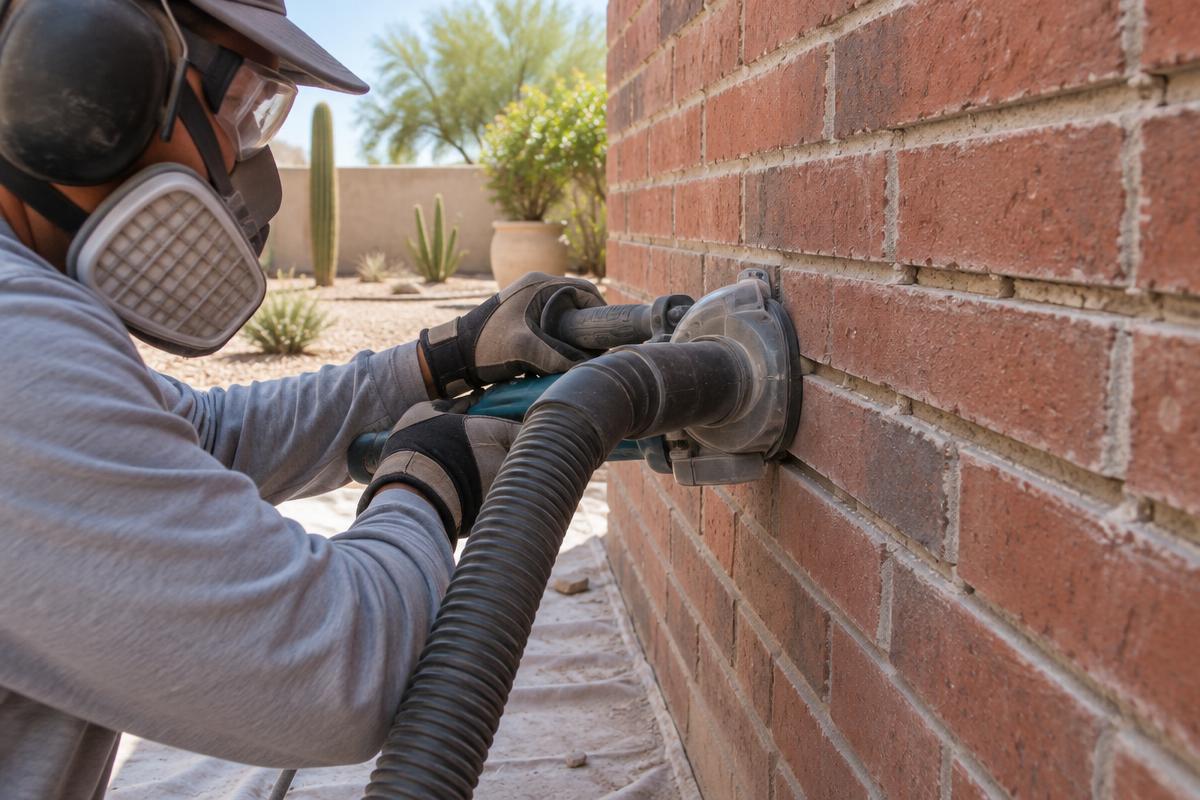
Grind out the failing mortar to a minimum depth of 3/4 inch using diamond blades with dust extractors.
Clean the open joints with compressed air or water to remove all dust and provide a clean bonding surface.
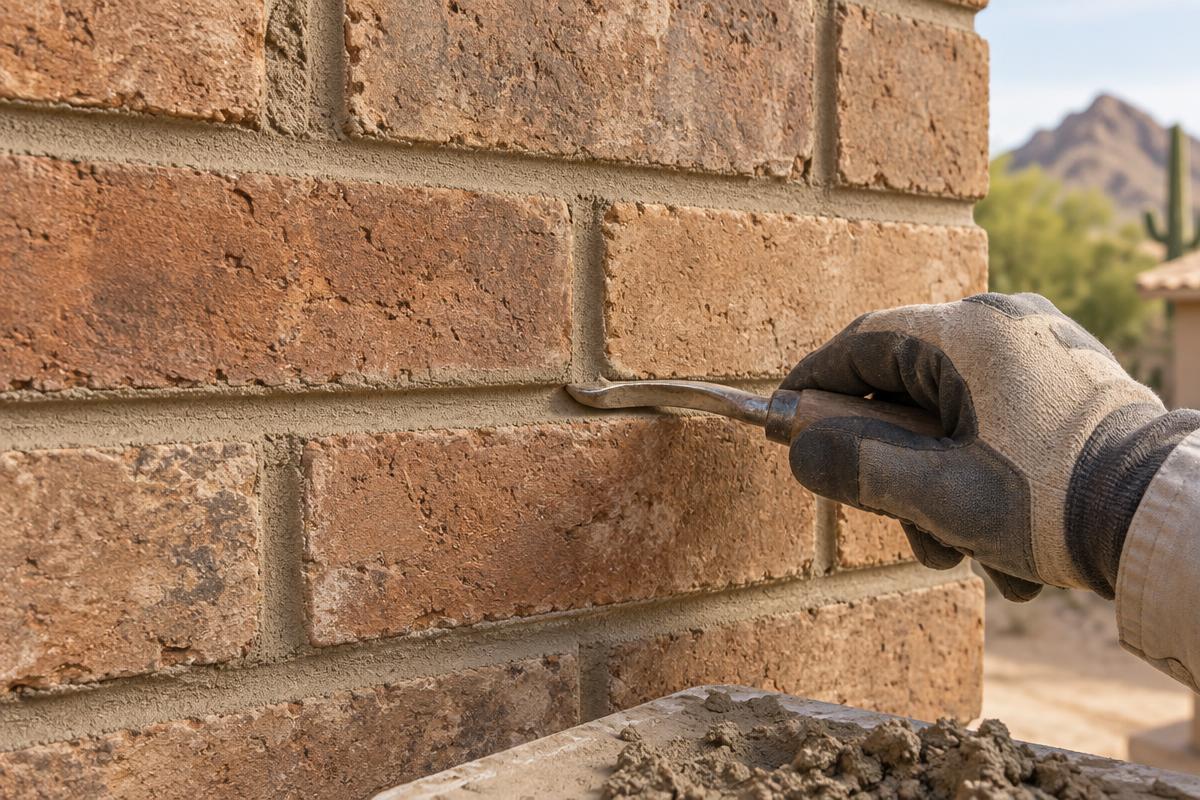
Pack the fresh mortar tightly into the joints in layers to prevent shrinkage and ensure full penetration.
Tool the joint to match the original profile, compacting the surface so it effectively sheds water.
Grinding vs. Hand Chiseling
Removing the old mortar is the most labor-intensive part of the job. The method used depends on the condition of the masonry units and the hardness of the existing mortar.
Angle Grinders with Dust Shrouds
For most modern block and brick walls, masons use 4-inch or 5-inch angle grinders equipped with diamond tuckpointing blades. This method is fast and cuts clean lines. Because grinding creates hazardous silica dust, professional crews use specialized shrouds connected to heavy-duty HEPA vacuums to capture the dust before it goes airborne.
Used on historic homes or very soft brick where a grinder might damage the masonry unit. It takes much longer but offers maximum control.
Used for vertical head joints where a round grinder blade would overcut into the brick above or below the joint.
Why You Cannot Ignore Failed Mortar
A masonry wall moves. It expands during hot Phoenix afternoons, contracts at night, and settles with the footing. The mortar must act as the flexible shock absorber for this movement.
Water Intrusion and Mold
Rain easily enters a receded joint. Once inside the wall cavity, it degrades the structural ties, causes efflorescence, and can lead to mold growth on interior drywall.
Spalling and Structural Risk
When mortar fails, the stress transfers to the brick face, causing it to crack and pop off. A wall missing significant mortar eventually loses its load-bearing capacity and can bow or collapse.
If you have seen brick faces flaking off beside old, failing joints, you are looking at the exact reason why tuckpointing should happen early.
Matching Mortar Color on Older Walls
Homeowners often expect a new repair to be invisible immediately. In reality, blending new mortar into a weathered wall requires skill, patience, and precise material selection.
Sand Sourcing
Sand carries much of the visible color. Finding a match often means visiting multiple aggregate suppliers to find the exact tone of the original mix.
Pigment Batching
Oxide pigments must be measured precisely by weight. Guessing the pigment amounts will cause the repair to stripe from one batch to the next.
Weathering
Fresh mortar always looks brighter. It takes months of sun exposure and rain for the new joint to fade into the surrounding wall.
Tooling Profile
A concave joint casts a different shadow than a flush joint. The mason must strike the new mortar exactly like the original to match the visual depth.
A careful mason mixes small test batches, tools them to match the existing wall, and lets them cure completely before committing to a larger repair. Day-one color is never the final color.
What to Ask Your Masonry Contractor
Not all contractors understand the chemistry and structural demands of masonry. Ask these questions before signing a proposal.
Frequently Asked Questions
How long does tuckpointing last?
Properly executed tuckpointing with compatible mortar can last 25 to 50 years. The exact lifespan depends on weather exposure, wall drainage, and how well the joints were tooled during the repair.
What is the difference between repointing and tuckpointing?
The terms are used interchangeably today. Repointing technically means replacing failing mortar. Tuckpointing originally meant using two contrasting colors of mortar to change the visual size of the joint. In modern masonry tuckpointing Arizona contractors use both words to describe the repair process.
Can I tuckpoint over painted brick?
No. The paint must be removed from the joint first. Mortar needs a clean, porous surface to bond correctly. If you pack wet mortar against paint, it will detach and fall out as soon as it cures.
When is the best time of year for tuckpointing in Phoenix?
The work can be completed year-round. During the peak summer heat, professional masons use specific hot-weather techniques, like pre-wetting the wall and covering the work, to keep the mortar from drying out too fast.
Does homeowners insurance cover tuckpointing?
Insurance generally treats mortar failure as standard wear and tear, which is not covered. If the mortar was damaged by a sudden, covered event like a fallen tree or vehicle impact, a claim might apply.
Talk to a Phoenix Masonry Contractor About Your Wall
New Era Masonry works throughout Phoenix, Gilbert, Mesa, Scottsdale, Paradise Valley, and the surrounding communities. We handle commercial and residential masonry repairs, tuckpointing, color matching, perimeter walls, brick work, and custom block installations.
If you have joints washing out, crumbling mortar, or a failing chimney, reach out for a written proposal. Licensed, bonded, and insured, ROC #339091.
Need Mortar Repair or a New Masonry Project?
New Era Masonry evaluates the wall, identifies the correct mortar type, and handles the repair from start to finish. We ensure the structural integrity of your property is fully restored.
Written by the New Era Masonry team, an Arizona masonry contractor with more than 40 years of block, brick, stone, and concrete work across three generations of masons.