
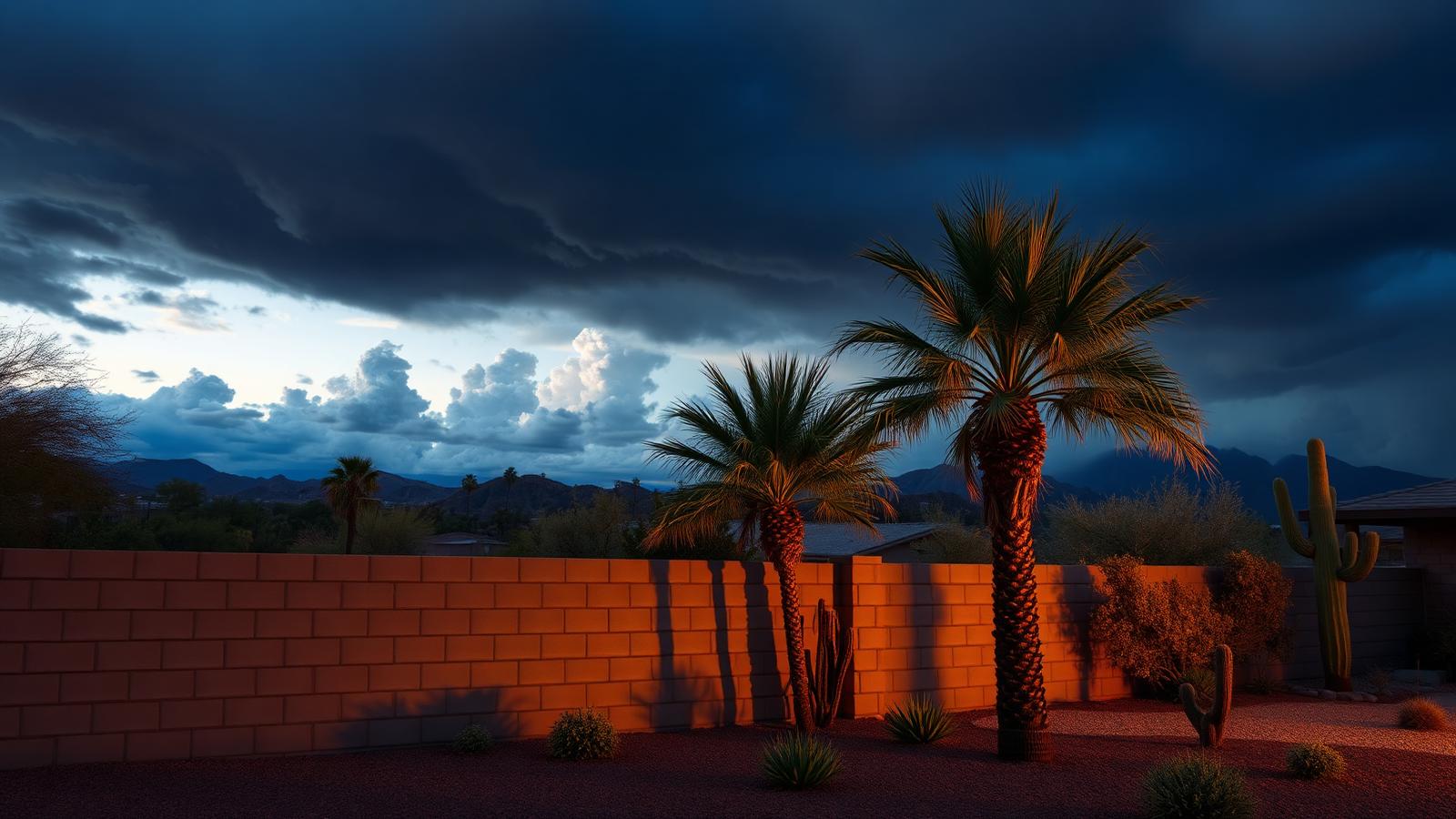
Phoenix Block Wall Monsoon Prep: A 7-Point June Checklist
Phoenix monsoon season can bring high winds, sideways rain, and standing water that finds every weak point in a block wall.
For homeowners and property managers across the Valley, June is the time to make sure your block walls are ready before the first major storm rolls through.
After three generations building and repairing masonry in the Sonoran Desert, the team at New Era Masonry has learned that most wall failures after the first storm are not surprises. They are usually problems homeowners could already see in May or early June but assumed could wait.
This pre-monsoon checklist explains what to inspect, what repairs should happen before storm season, and when to call a licensed Phoenix mason. For professional help with block walls, stucco, stonework, and custom masonry, explore our full masonry services.
Why Monsoon Season Is the #1 Cause of Block Wall Failure in the Valley
Phoenix block walls rarely fail because of one storm. They usually fail because Arizona’s climate cycles attack three weak points at once: stucco coating, mortar joints, and footings.
- Stucco coating. Small thermal cracks open in the heat, allowing water to enter. As moisture evaporates, it can push the coating away from the block.
- Mortar joints. Alkaline mortar degrades under UV exposure all summer, then absorbs storm moisture and begins to spall during humidity swings.
- Footings. Caliche soil expands when wet and contracts when dry, lifting and dropping wall sections in a short period of time.
A wall that looked fine in May can develop a visible stair-step crack by July if one of those areas was already compromised.
The 7-Point Pre-Monsoon Wall Inspection
Walk every linear foot of your block wall, both inside and outside, with a flashlight in the early morning when shadows make cracks easier to see. Look for:
- Vertical or stair-step cracks wider than a credit card edge, roughly 1/16 inch.
- Bulging or leaning wall sections — sight down the top course or use a level.
- Efflorescence, or white powdery deposits, which can signal water movement through the block.
- Spalled or “popped” stucco where the coating has separated from the CMU.
- Soft or missing mortar joints that can be scratched out with a screwdriver.
- Soil washed away from the footing on the uphill side.
- Vegetation such as oleander, mesquite, or palm roots within 4 feet of the wall.
New Era Masonry tip: Any two of these signs together should be treated as a repair call before the first storm, not after it.
Sealing, Waterproofing, and Drainage: What Actually Works in Phoenix
Big-box elastomeric paint may be marketed as masonry waterproofing, but Phoenix sun can make film-forming coatings brittle over time. Once that happens, the coating may trap moisture inside the wall and accelerate spalling instead of preventing it.
For Phoenix block walls, New Era Masonry typically recommends breathable, masonry-appropriate solutions:
- Penetrating silane/siloxane sealer instead of film-forming coatings, so the wall can breathe.
- Acrylic-modified elastomeric stucco patch for cracks under 1/8 inch.
- Cut, clean, and re-pack mortar joints for wider cracks instead of simply caulking over the problem.
- Open weep holes at the base of retaining sections every 4–6 feet so trapped water has a path out.
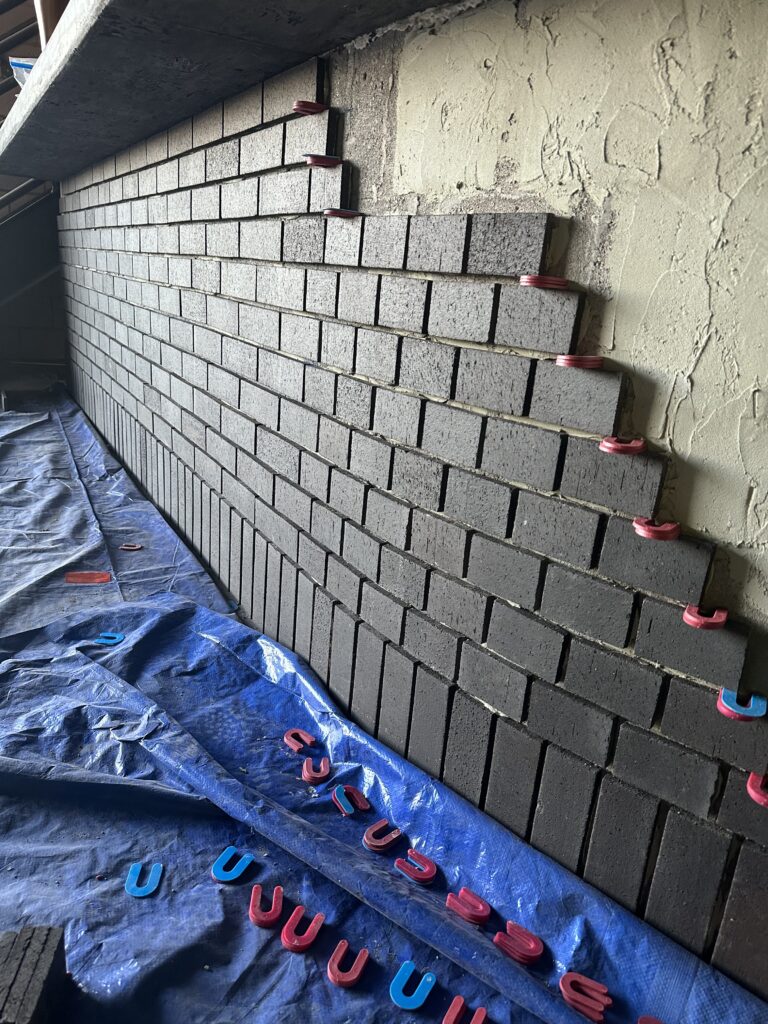
“The single biggest mistake we see Phoenix homeowners make in June is painting over a problem instead of opening it up.”
— New Era Masonry, three generations of Valley masons
Drainage and Grading: The Part Most Homeowners Skip
A structurally sound wall can still fail if the yard slopes water toward it. During a fast monsoon cell, runoff can place major pressure against the base of a wall, especially if the soil stays saturated.
Before the first storm:
- Make sure soil slopes away from the wall at least 1/4 inch per foot for the first 4 feet.
- Clear gravel or decomposed granite away from weep holes so they stay open.
- Redirect downspouts so they discharge at least 6 feet from any wall footing.
- For retaining walls, verify the gravel backfill and drain pipe behind the wall have not silted up.
Repair vs. Wait: What Is Safe to Push to Fall?
Not every flaw is an emergency. The table below shows how New Era Masonry generally triages block wall issues before monsoon season.
| Priority | Wall Condition | Recommended Timing |
|---|---|---|
| Repair before monsoon | Visible lean, stair-step cracks wider than 1/16 inch, missing mortar, exposed rebar, undermined footings, or retaining walls with no drainage. | Schedule in June before the first organized storm. |
| Monitor through monsoon | Hairline stucco cracks under 1/32 inch, minor efflorescence on one course, or small cosmetic chips at the cap. | Photograph and re-check after each major storm. |
| Repair in fall | Full re-coat, color-matched re-stucco, decorative cap replacement, or full repaint. | Plan for October or November when conditions are easier on masonry materials. |
| Never DIY in June heat | Anything requiring rebar exposure, footing excavation, or mortar work above 100°F substrate temperature. | Call a licensed mason so the repair cures correctly. |
| Call same day | Any wall section that has visibly moved since May or any wall leaning toward a sidewalk, street, or neighboring property. | Request an immediate inspection. |
Why Hire a Licensed Phoenix Mason Before Monsoon?
Monsoon prep is the season when many handymen start advertising masonry repairs. Before signing anything, ask the right questions:
- Are you an ROC-licensed masonry contractor, and what is your license number?
- Do you carry general liability and workers’ compensation insurance?
- What sealer are you applying, and what is the manufacturer’s warranty?
- Are you tuckpointing the joint or just caulking over it?
- Will the work cure properly in current substrate temperatures, or should it be scheduled for morning or evening?
“The walls that survive are the ones that were inspected in June, not the ones that were painted in May.”
— Jose Peralta, Owner of New Era Masonry
Frequently Asked Questions
How much does pre-monsoon block wall maintenance cost in Phoenix?
A walk-the-property inspection and minor crack-and-seal package typically runs $450–$900 for a standard residential lot. Full tuckpointing of a 60-foot section averages $1,200–$2,400. Replacing a leaning section can run $85–$135 per linear foot.
Can I seal my block wall myself before monsoon?
Yes, if the wall is structurally sound. Use a quality penetrating silane/siloxane sealer with a low-pressure sprayer and apply early in the morning. Avoid film-forming “waterproof paint.”
How long do I have before the first monsoon storm?
Monsoon season officially runs from mid-June through September. A two-week lead time is realistic for many minor repairs, while structural work may need three to four weeks.
Will homeowners insurance cover monsoon block wall damage?
Usually only if the failure is directly tied to a covered storm event. Damage caused by pre-existing cracks, deferred maintenance, settlement, or poor drainage is often excluded. Document your wall’s condition with timestamped photos before the season starts.
My HOA wall is leaning. Whose responsibility is it?
Responsibility depends on the CC&Rs and the wall’s location relative to the lot line. Many Valley HOAs cover perimeter walls but not interior shared walls. A professional inspection can help document the condition and determine next steps.
What is the difference between sealing and waterproofing?
Sealing slows water absorption while allowing the wall to breathe. Waterproofing creates a moisture barrier and is usually used below grade. For above-grade Phoenix block walls, breathable sealing is usually the better choice.
Get a Free On-Site Estimate from New Era Masonry
New Era Masonry brings three generations of Phoenix masonry experience to block wall repairs, custom masonry, stonework, and monsoon preparation. Licensed, bonded, and insured, we service Phoenix, Gilbert, Mesa, Chandler, Scottsdale, Tempe, Queen Creek, and the East Valley.
Have more questions? Visit our FAQ page or contact our team today.
Request a Free Estimate