

Mortar Joint Repair and Tuckpointing Guide for Phoenix Masonry
Masonry walls are built to last, but the mortar between the bricks and blocks takes a beating. Extreme heat, monsoon moisture, and age break down these joints. When that happens, tuckpointing restores the strength and seals the wall.
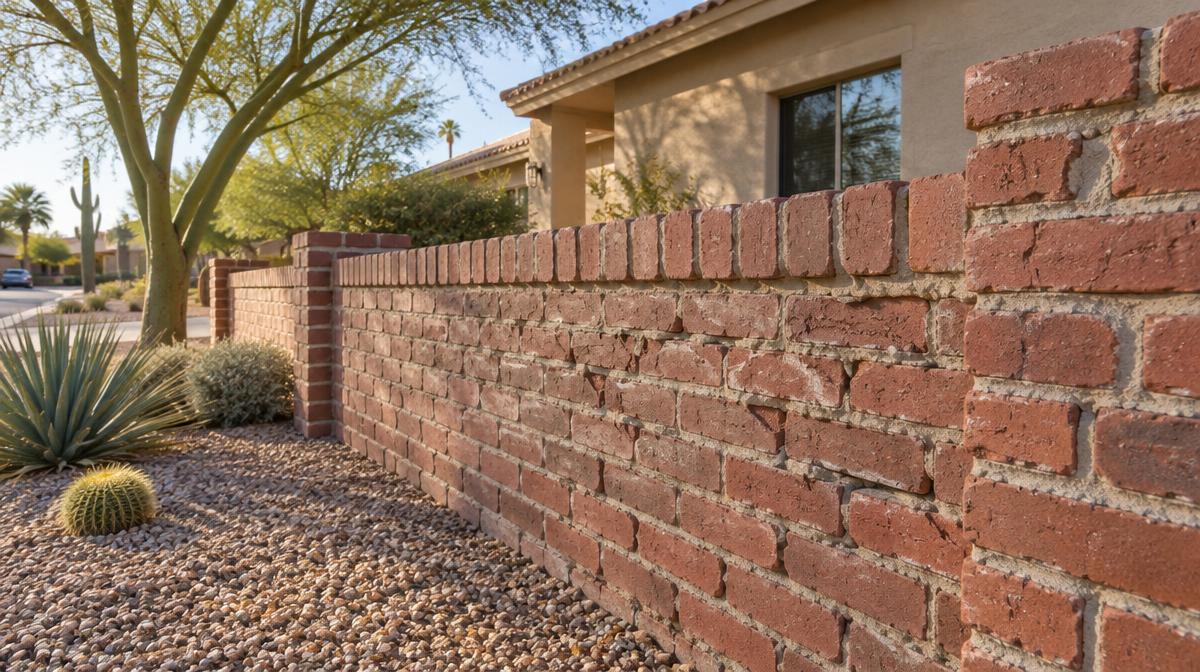
Mortar is designed to be the softer, sacrificial part of a masonry wall. It absorbs movement and takes the brunt of the weather so the bricks do not crack. Over time, that constant duty wears the mortar out.
In Phoenix, intense thermal expansion cycles accelerate this process. When deteriorating mortar joints erode, water enters the wall and causes structural problems. This guide explains why mortar fails, how to spot the damage, and how proper tuckpointing fixes the issue.
Key Takeaways
- Heat and moisture drive mortar deterioration by weakening the binding agents.
- Eroding, cracking, and crumbling joints mean you need mortar joint repair Phoenix AZ.
- Masonry tuckpointing Phoenix AZ involves grinding out bad mortar and packing in new material.
- New mortar must match the original compressive strength to prevent brick damage.
- Patching over old mortar without grinding it out first guarantees a failed repair.
Why Mortar Deteriorates in Phoenix
Even perfectly mixed mortar has a lifespan. The unique climate in Arizona puts heavy stress on masonry joints through rapid temperature changes and intense storms.
Walls heat up in the sun and expand daily. The mortar flexes to handle this movement, which slowly breaks down its internal structure over decades.
Sprinklers hitting a wall or poor drainage forces water into the mortar. This moisture dissolves the binding agents.
Wind-driven rain hits the porous surface of the joints. The heavy washing action pulls sand and cement away over time.
Mortar mixed with too much sand or too little water on day one will crumble years earlier than it should.
A sprinkler head spraying directly onto a block fence every day will rot the mortar out in a fraction of its normal lifespan. Adjusting your irrigation protects your masonry.
The Stages of Mortar Failure
Deterioration does not happen overnight. Knowing the stages helps you schedule repairs before the structural integrity of the wall is compromised.
| Stage | Visual Sign | Required Action |
|---|---|---|
| Stage 1 | Hairline cracks along the joints | Monitor for widening. Often caused by normal settlement. |
| Stage 2 | Sandy surface texture | Plan for tuckpointing. The binder is wearing away. |
| Stage 3 | Recessed or missing mortar | Immediate repair needed. Water is actively entering the wall. |
| Stage 4 | Loose bricks or blocks | Partial wall rebuild. Tuckpointing is no longer sufficient. |
Once the mortar recedes past the face of the brick, it forms a shelf that catches rainwater. This accelerates the deterioration exponentially.
Tuckpointing vs. Repointing
You will hear these terms used interchangeably in the residential masonry world, but they mean slightly different things historically.
Repointing
This is the technical term for grinding out old, failing mortar to a specific depth and packing fresh mortar into the joint. It is a structural repair.
Tuckpointing
Historically, this meant using two colors of mortar to create the illusion of fine joints. Today, most contractors and homeowners use the word tuckpointing to describe standard repointing work.
Whether you call it tuckpointing or repointing, the physical process of restoring the wall is the exact same.
Signs You Need Mortar Joint Repair Phoenix AZ
Spotting the damage early keeps the repair costs low. Walk the perimeter of your property and look for these specific red flags.
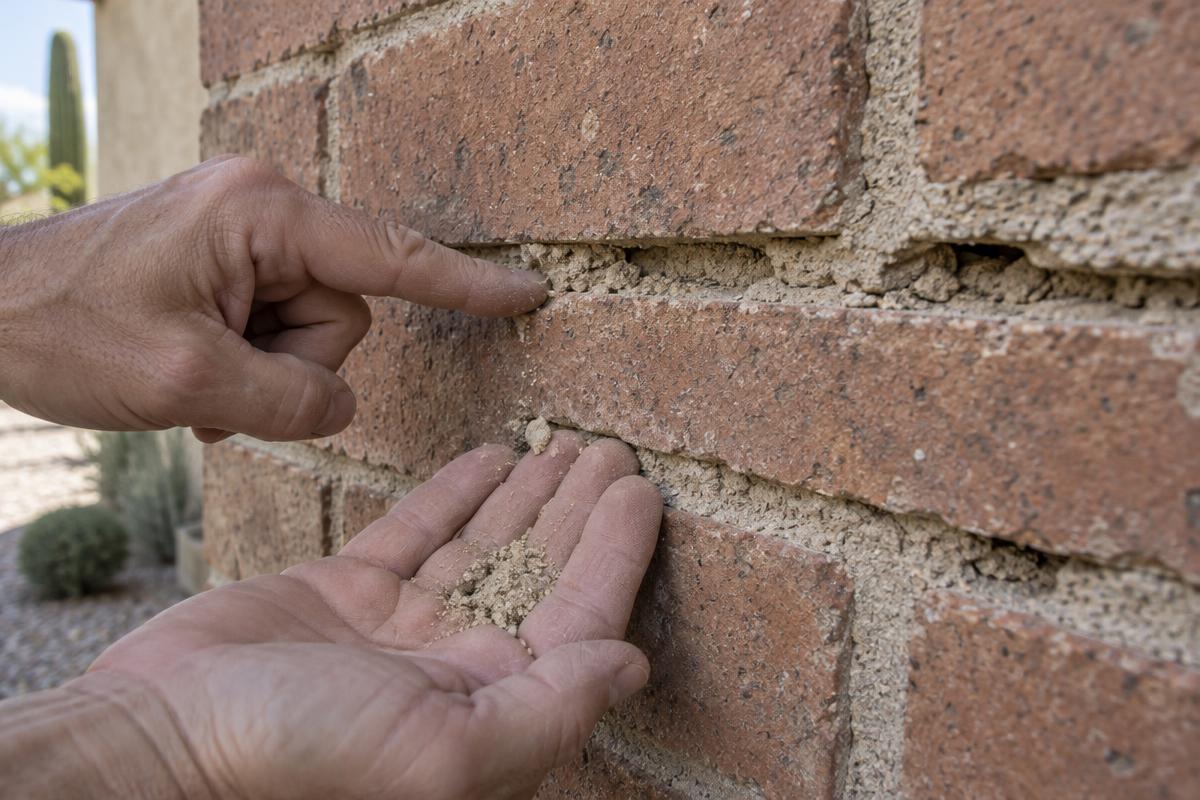
Joints look empty. The mortar has washed away completely in certain sections, leaving gaps between the bricks.
The mortar turns to dust when you rub a finger across it. This means the cement has failed.
Zig-zag cracks that follow the mortar lines. These indicate wall movement that has broken the mortar bond.
White efflorescence stains on the wall face. This mineral bloom proves that moisture is moving through the joints.
How Masonry Tuckpointing Phoenix AZ Works
A successful repair requires strict preparation. Slapping new wet mortar over old dry mortar is a waste of time. The professional process follows distinct steps.
- Inspect the wall to locate all failing joints and mark the repair zones.
- Grind or chisel out the damaged mortar to a depth of at least 3/4 inch, or until solid material is reached.
- Clean the joints with compressed air or water to remove all dust and loose debris.
- Select a mortar type that matches the original compressive strength to prevent spalling.
- Pack the new mortar into the joint in layers to prevent shrinkage and ensure a solid bond.
- Tool the joint to match the existing profile and seal the surface against water.
New mortar needs enough surface area to grip the bricks. Grinding out the old joints to a minimum depth of 3/4 inch provides the mechanical lock required for a lasting repair.
The Challenge of Color Matching
Getting a patch to blend perfectly with a decades-old wall is one of the hardest parts of mortar joint repair. Fresh mortar always looks different than weathered material.
The sand creates the base tone of the joint. Different sand pits produce different shades of tan, brown, and gray.
Gray portland cement varies by batch. White portland is often required to create lighter joints.
Old mortar has spent years bleaching in the Arizona sun. A brand new patch will often look darker until it cures and weathers.
Why DIY Patches Fail
Many homeowners try to fix deteriorating mortar joints with a bag of pre-mixed concrete and a caulk gun. These repairs fail quickly and often cause secondary damage.
Using Concrete Mix
Concrete is too hard. If the repair mortar is harder than the original bricks, the next thermal expansion cycle will crack the bricks instead of the mortar.
Smearing the Face
Without the right tools, wet mortar gets smeared across the brick face. Once it dries, it leaves permanent gray stains that are incredibly difficult to remove.
Shallow Preparation
Skipping the grinding step means the new mortar is spread too thin. It will dry out, flake off, and fall to the ground within a few months.
Using Caulk
Caulking mortar cracks traps moisture inside the wall system. It prevents the wall from breathing and accelerates the decay of the surrounding masonry.
Tooling Profiles for Tuckpointing Repairs
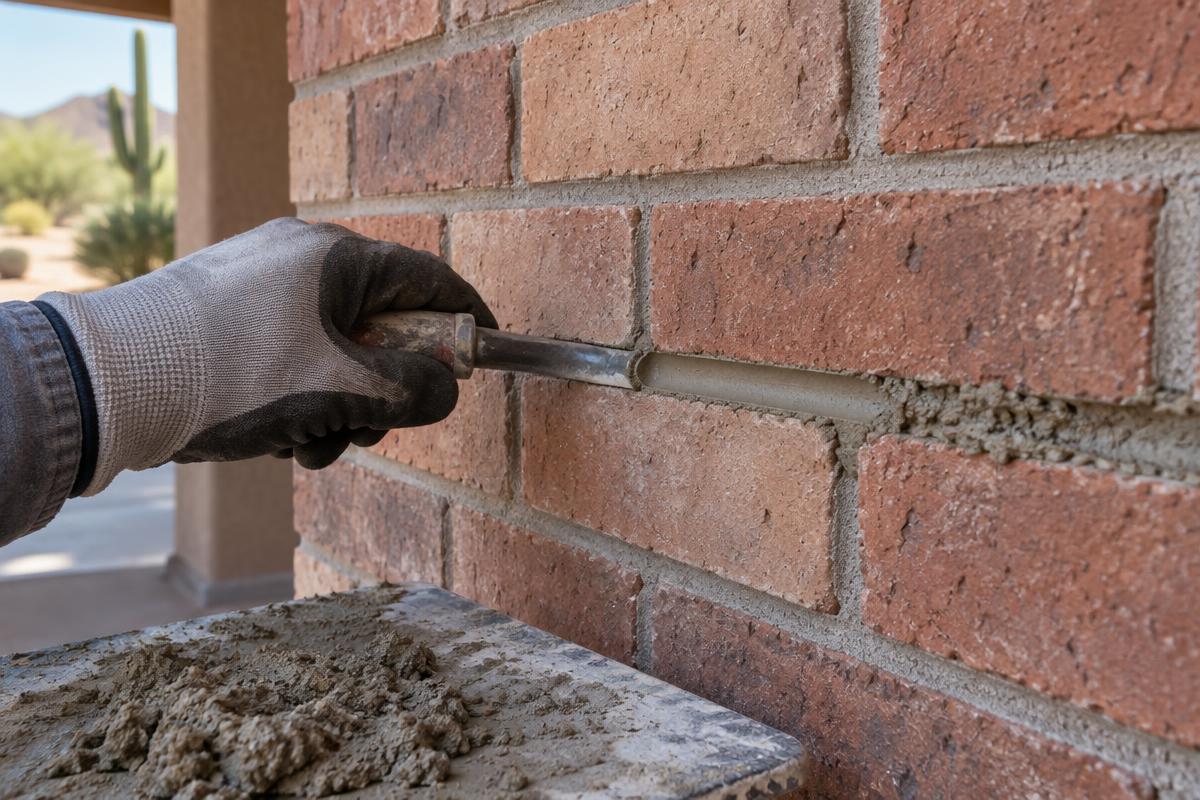
The final step in tuckpointing is tooling. Compressing the wet mortar shapes it to match the rest of the wall and seals the surface against rain.
| Joint Profile | Function | Best Application |
|---|---|---|
| Concave | Highly compressed and sheds water efficiently | Standard exterior walls and block fences |
| V Joint | Compressed with a sharp shadow line | Decorative brickwork requiring distinct shadows |
| Weathered | Angled outward to drain water away | Older brick structures with specific historical matching |
| Flush | Struck flat against the brick face | Interior walls where water shedding is not a concern |
What to Ask Your Mason Before Hiring
Asking these questions separates professional masonry crews from handymen who just patch over the surface.
Frequently Asked Questions
How long do mortar joints typically last?
Properly mixed and tooled joints can last 20 to 30 years in Arizona. Walls exposed to constant sprinkler spray or heavy monsoon runoff will deteriorate much faster.
What happens if I ignore deteriorating mortar joints?
Water will enter the wall cavity. This rusts the internal rebar, causes bricks to crack and spall, and eventually leads to structural collapse. Ignoring mortar failure turns a simple repair into a complete wall rebuild.
Can I just caulk the cracks in my mortar?
No. Caulk traps moisture inside the masonry system and does not restore structural strength. Mortar needs to breathe, and applying caulk accelerates the deterioration of the surrounding bricks.
How much does tuckpointing cost?
Costs depend on the total square footage, the depth of grinding required, and the complexity of color matching. It is usually priced per square foot or linear foot. Repairing early is always cheaper than rebuilding late.
Talk to a Phoenix Masonry Contractor About Your Wall
New Era Masonry works throughout Phoenix, Gilbert, Mesa, Scottsdale, Paradise Valley, and surrounding communities. We handle commercial and residential masonry repairs, tuckpointing, color matching, perimeter walls, retaining walls, brick and block work, and new construction.
If you have deteriorating mortar joints or missing bricks, reach out for a written proposal. Licensed, bonded, and insured, ROC #339091.
Need Mortar Joint Repair?
New Era Masonry can evaluate the wall, grind out the failing joints properly, match the mortar strength, and execute a professional tuckpointing repair that protects your property.
Request a Written Proposal View Masonry RepairsWritten by the New Era Masonry team, an Arizona masonry contractor with more than 40 years of block, brick, stone, and concrete work across three generations of masons.