
Tuck Pointing in Phoenix: How to Tell When Your Mortar Joints Need Repair
A homeowner’s guide to recognizing failing mortar, understanding what tuck pointing actually is, and knowing when a Phoenix brick or block wall needs professional repair before small joint failures turn into structural problems.
In This Guide
- Why mortar fails faster in Arizona
- What tuck pointing actually is
- Tuck pointing vs. repointing vs. rebuilding
- 7 warning signs your mortar joints need repair
- What causes mortar failure in Arizona
- The professional tuck pointing process
- How to choose a Phoenix masonry contractor
Why Mortar Fails Faster in Arizona
If you own a brick home, a block perimeter wall, a masonry chimney, or a stucco-over-block facade anywhere in the Valley, your mortar joints are quietly doing the hardest job on the building. They hold everything together, absorb decades of movement, and take the direct hit from every summer of UV, every monsoon downpour, and every winter cold snap that follows a 100-degree afternoon.
And here in Phoenix, mortar wears out faster than almost anywhere else in the country. It isn’t the individual weather events. It’s the cycle. Surface temperatures on a south-facing brick wall can swing 60 to 80 degrees in a single day. Mortar and brick expand and contract at slightly different rates, and after 20, 30, or 40 years of that daily flexing, the joints give up before the masonry units do.
Tuck pointing is how you fix that the right way before the wall itself starts to shift.
What Tuck Pointing Actually Is
Tuck pointing, sometimes called tuckpointing or pointing, is the process of grinding out the failed, cracked, or crumbling mortar between brick or block units and replacing it with fresh mortar that matches the original in color, hardness, and profile.
It is not caulking. It is not a smear of new mortar over the old. Done correctly, tuck pointing removes the top 3/4 to 1 inch of failed joint, cleans the surfaces, and installs new mortar in two layers so it bonds mechanically and chemically to what’s underneath.
Tuck Pointing vs. Repointing vs. Rebuilding
These three terms get used interchangeably online, but they mean different scopes of work and different price tiers. Here’s how a professional mason actually distinguishes them:
| Term | What It Means | When It’s the Right Call |
|---|---|---|
| Tuck pointing | Grinding out and replacing failed mortar joints in a targeted area. Original brick or block stays in place. | Joint failure only. Brick and structure are still sound. |
| Repointing | Full re-mortaring of an entire wall or section. Often used interchangeably with tuck pointing. | Widespread joint failure across most of a wall’s surface. |
| Rebuild | Removing brick or block units and rebuilding the wall or a section of it. | Structural movement, bulging, leaning, or units themselves are cracked or spalling. |
7 Warning Signs Your Mortar Joints Need Repair
Most Phoenix homeowners don’t notice failing mortar until they can already flick pieces of it out with a fingernail. By then, the joint has been letting water into the wall for years. Here’s what to look for before it gets to that point:
| # | Warning Sign | Severity | What to Do |
|---|---|---|---|
| 1 | Mortar you can scrape out with a screwdriver or key | Moderate to High | Schedule an inspection within 30 to 60 days |
| 2 | Hairline cracks running along the joints, not through the brick | Low to Moderate | Monitor and photograph; plan for tuck pointing this season |
| 3 | Powdery white residue, or efflorescence, on the wall face | Moderate | Water is moving through the joints, so get it inspected |
| 4 | Small chunks of mortar on the ground below the wall | Moderate to High | Active joint failure, schedule repair |
| 5 | Gaps or missing mortar at the top of a block wall or chimney cap | High | Priority repair because top-down water intrusion accelerates damage |
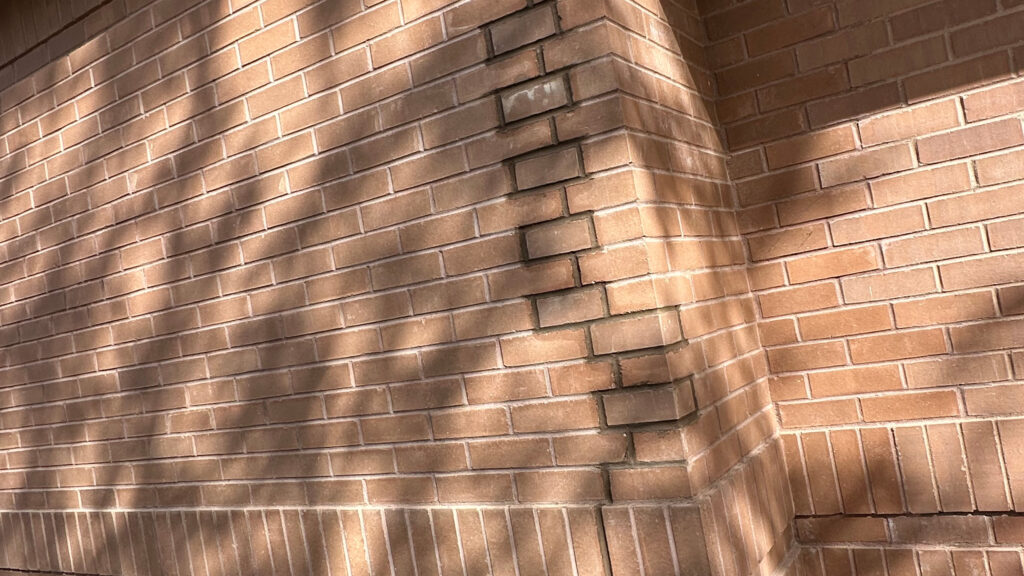
| 6 | Cracks that step-pattern through both mortar and brick | High / Structural | Get a professional evaluation before pointing because it may indicate movement |
| 7 | Damp interior wall behind an exterior masonry surface | High | Water is bypassing the joints; repair before drywall damage spreads |
If a screwdriver sinks more than 1/4 inch into a mortar joint under light pressure, that section is due for tuck pointing. If it sinks a full inch, it’s overdue.
Rule of thumb from New Era MasonryTo compare what failing joints look like in real projects, browse the New Era Masonry gallery.
What Causes Mortar Failure in Arizona
Mortar doesn’t fail randomly. Almost every failure we’re called out to in the Valley traces back to one of five specific mechanisms, and often several of them working together.
UV Exposure
Direct sun breaks down the binders in older lime-based and lower-grade mortars, chalking the surface and weakening the joint from the outside in.
Thermal Cycling
Daily 40 to 70 degree surface temperature swings cause brick and mortar to expand and contract at different rates, fatiguing the joint over decades.
Monsoon Moisture
Wind-driven rain forces water into micro-cracks. When that water evaporates in summer heat, dissolved salts crystallize and pop mortar apart from within.
Efflorescence & Salt Migration
White powdery deposits are a symptom. The underlying salt movement is what erodes the mortar matrix.
Foundation & Soil Movement
Expansive Valley soils shift with seasonal moisture, transmitting stress into wall joints. Mortar cracks first because it’s the weakest link by design.
Tuck Point, Repoint, or Rebuild? A Decision Matrix
Before you get a quote, it helps to know roughly what scope of work you’re actually looking at. Use this as a starting point. A licensed mason should confirm on-site.
| What You’re Seeing | Likely Scope | Why |
|---|---|---|
| A few isolated joints crumbling, rest of wall sound | Spot tuck pointing | Localized failure, no structural indicators |
| Most joints on one wall face are soft or receding | Full-face repointing | Wall-wide mortar fatigue, so piecemeal repair won’t hold |
| Step cracks through brick and mortar, wall bulging or leaning | Partial or full rebuild | Structural movement, not just joint failure |
| Chimney crown cracked, joints failing near the top | Repoint + crown repair | Top-down water entry drives the whole failure pattern |
| Block wall with cracked cap, joints eroding at the top course | Repoint + cap replacement | Cap failure exposes cores to monsoon water intrusion |
The Professional Tuck Pointing Process
Anyone can smear mortar on a wall. Doing it so it lasts 30 more years and so it matches the original is a completely different job. Here is the process a legitimate Phoenix masonry contractor should follow:
Assessment
Inspect the full wall, identify failed vs. sound joints, check for structural indicators, and photograph the existing mortar profile and color.
Grind Out
Remove failed mortar to a minimum depth of 2 times the joint width, typically 3/4 to 1 inch, using a masonry grinder with proper dust control.
Clean the Joints
Blow out dust, flush loose debris, and dampen the substrate so it doesn’t wick water out of the fresh mortar.
Color Match
Blend the mortar mix to match the existing joint color. This is the step most contractors skip.
Pack and Tool
Install new mortar in two lifts, then tool the joint to match the original profile, whether concave, V, weathered, flush, or raked.
Cure
Mist the joints periodically for 24 to 72 hours in dry Phoenix conditions so the mortar cures instead of flashing off.
Why the color match step matters: A tuck pointing job that uses the wrong mortar color looks like a permanent bandage on your house. New Era Masonry offers on-site mortar color matching as its own dedicated service, matching color, texture, and joint profile so the repair disappears into the original wall.
Mortar Color Matching: The Difference Between a Repair and a Restoration
Every mortar joint in Arizona has been sun-bleached, weathered, and stained by decades of runoff. Fresh mortar out of a bag is almost never going to match. It will read as bright gray against a warm, faded tan joint, or as flat gray against a wall that has aged toward brown.
Proper color matching uses on-site sample panels, dry pigment additives, and cured comparison strips before a single joint gets tooled. It adds time to the job, but it is the difference between neighbors asking whether you had work done and neighbors never noticing at all.
What to Look For in a Phoenix Masonry Contractor
Tuck pointing is one of those trades where the difference between an experienced mason and a general handyman shows up on the wall within 3 to 5 years. Here’s what to verify before you hire:
- Arizona ROC licensed and insured. Verify the license number on the ROC website before hiring.
- Real Phoenix-area masonry portfolio. Ask for completed work you can actually see and drive by.
- Proper joint grinding. Make sure they grind out failed joints instead of skimming over them.
- On-site color matching. Avoid one-size-fits-all mortar mixes that leave obvious patch marks.
- Written scope of work. The estimate should explain what gets removed, replaced, and how the joints get tooled.
- Dust control. Grinding mortar in Phoenix without proper dust control is a health hazard.
- Written workmanship warranty. A reputable contractor should stand behind the repair.
See the work before you hire. Browse completed Phoenix-area tuck pointing, block wall, and custom masonry projects in the New Era Masonry project gallery. Every project shown is a real client wall in the Valley, not stock photography.
Frequently Asked Questions
How long does professional tuck pointing last in Phoenix?
When installed correctly with a properly matched mortar and cured for the Arizona climate, tuck pointing typically lasts 25 to 40 years before those same joints need attention again. Poorly installed work often begins failing within 3 to 5 years.
Can I DIY tuck pointing on my own home?
You can on a small planter or garden wall. On a structural wall, chimney, or full house facade, we don’t recommend it. The grind-out depth, mortar mix, and tooling technique are all easy to get wrong in ways that trap moisture and accelerate damage instead of stopping it.
What’s the best time of year to do tuck pointing in the Valley?
October through April is ideal. Cooler ambient temperatures let fresh mortar cure slowly enough to develop full strength. Mid-summer work is possible but requires more aggressive misting and shading to prevent flash curing.
Will tuck pointing stop water from getting into my wall?
Yes, when it’s the actual source of the leak. If water is entering through a cracked chimney crown, failed wall cap, or roof flashing above the wall, those need to be addressed at the same time or the new joints will fail early.
Do I need a permit for tuck pointing in Phoenix?
For standard homeowner tuck pointing on an existing residential wall, typically no. Structural rebuilds, new walls, and commercial work usually do. Your contractor should know your jurisdiction’s rules.
My block wall is fine but the mortar cap is crumbling. Is that tuck pointing?
Cap repair is a related but separate scope. It’s often bundled with tuck pointing on the top course because the two problems feed each other. A failed cap dumps water into the joints below it.
What does tuck pointing cost in Phoenix?
Cost depends on wall height, joint condition, access, and how much color matching is involved. Rather than quoting a range that won’t apply to your specific wall, we recommend an on-site estimate. Most masonry contractors provide these at no cost.
How do I know if my wall needs a rebuild instead of tuck pointing?
The tell is whether the cracks run through the brick or block units themselves, not just the mortar. Structural cracks, leaning, or bulging mean movement, and no amount of new mortar will stop a wall that’s actively shifting.
Ready to Have Your Mortar Joints Evaluated?
If any of the warning signs in this guide look familiar on your home, chimney, or perimeter wall, the fix almost always gets easier and less invasive the earlier you address it.
See the New Era Masonry portfolio, learn about our tuck pointing service, or request an on-site evaluation through our contact page.
Request an On-Site Evaluation Explore Tuck Pointing See Our Work