
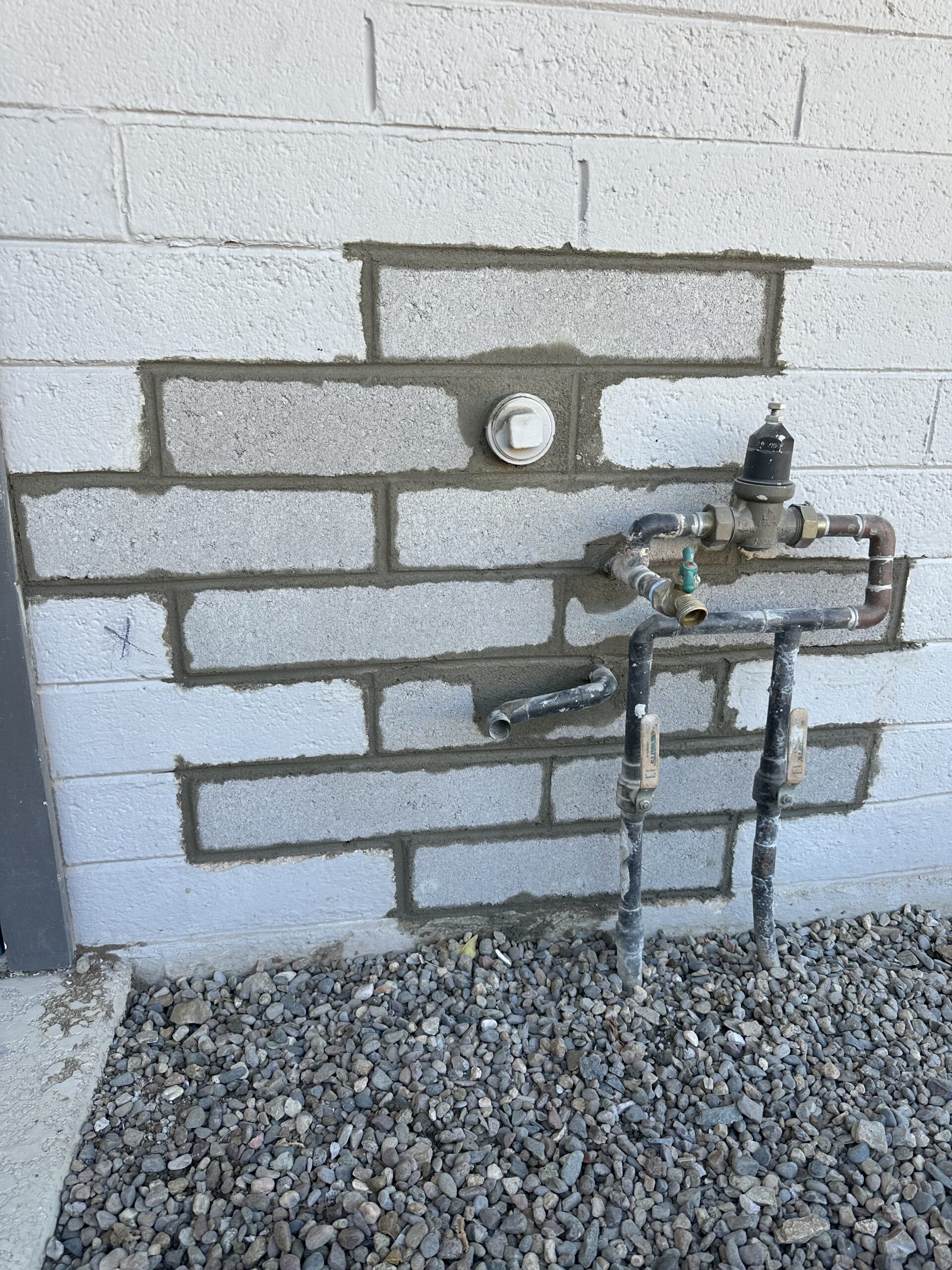
Masonry Mortar in Arizona: Type N, S, M, and O Explained, Plus Mixing, Curing, and Color Matching
Mortar is the only part of a masonry wall that is mixed on site, which is exactly why it is the part most often gotten wrong. The right mortar has to bond, seal, flex with the masonry around it, and survive Arizona heat without losing the moisture it needs to cure.
Every masonry wall has two materials in it. One shows up on a truck already made: the brick, block, or stone. The other is mixed on site by a person making judgment calls about sand, water, time, and temperature. That second material is the mortar, and it has a major effect on how the wall performs.
This guide explains what masonry mortar is, what Type N, S, M, and O are actually for, how mixing and curing change in Arizona heat, and why matching an existing wall is harder than simply adding pigment.
Key Takeaways
- Mortar is not glue and it is not concrete. It is a bedding material that bonds, seals, and flexes with masonry units.
- Type N and Type S cover most Arizona residential and light commercial work. Type M and Type O have narrower uses.
- Stronger is not always better. Mortar that is harder than the unit can push cracking and spalling into the masonry itself.
- Heat is the variable that ruins good mixes. Mortar that loses water too fast does not get a fair chance to bond and cure.
- Color matching depends on sand, cement, pigment, age, and joint tooling, not pigment alone.
What Masonry Mortar Actually Is
Mortar is a mix of cementitious material, lime, clean sand, and water. Each ingredient has a separate job, and changing the balance changes how the joint performs.
Provides compressive strength and early set.
Improves workability, water retention, and the ability of fine cracks to reseal over time.
Makes up most of the mix by volume. Gradation affects workability, shrinkage, and final color.
Triggers hydration and controls placement. Too much weakens the mix, while too little can stop proper bonding.
Mortar is not an adhesive. It bonds mechanically as it is drawn into the pores of the masonry unit while still plastic, which is why unit suction, water retention, and timing matter so much.
Mortar vs. Concrete vs. Grout vs. Stucco
These materials may all be gray and cement based, but they do different jobs and are not interchangeable.
| Mix | What It Is | Where It Goes |
|---|---|---|
| Mortar | Cement, lime, fine sand, and water with low water content and high workability | Bed and head joints between masonry units |
| Concrete | Cement, sand, and coarse aggregate with higher compressive strength | Footings, slabs, driveways, patios |
| Grout | Cement, sand, fine aggregate, and enough water to flow and consolidate | Block cells around rebar |
| Stucco | Cement, sand, and lime applied in finish coats | Exterior wall finish over masonry or lath |
Concrete mix does not belong in a mortar joint. The coarse aggregate does not tool correctly, and the mix often cures harder than the surrounding masonry, which can move the failure into the unit itself.
The Four Mortar Types Under ASTM C270
The industry standard for masonry mortar is ASTM C270. It recognizes four primary types: M, S, N, and O. Each has a different balance of compressive strength, bond, workability, and flexibility.
| Type | Relative Strength | Character | Typical Arizona Use |
|---|---|---|---|
| Type M | Highest | Rigid, high compressive strength, lower workability and bond | Below-grade masonry, foundation walls, retaining structures, heavy load-bearing work |
| Type S | High | Strong with good bond and useful flexibility | Structural block walls, exterior perimeter walls, soil-contact work, wind and seismic demand |
| Type N | Medium | Balanced bond, workability, and flexibility | Above-grade exterior work, brick veneer, chimneys, general residential masonry |
| Type O | Low | Soft, highly workable, low compressive strength | Interior non-load-bearing work and compatible repointing of soft historic brick |
In practice, most Phoenix-area residential and light commercial work lands on Type S or Type N. Type S goes where the wall is structural or in ground contact. Type N is common for above-grade work where bond and weather resistance matter more than raw compressive strength.
Why a Stronger Mortar Is Usually the Wrong Mortar
A masonry wall moves. It expands during hot weather, contracts when temperatures drop, settles with the footing, and takes wind load during storms. Something in that assembly has to absorb movement.
Compatible Mortar
When mortar is the softer part of the assembly, fine movement and cracking tend to happen in the joint, which is a repairable and expected location.
Mortar That Is Too Hard
When the joint refuses to move, stress can transfer into the masonry unit. That is when brick faces spall, corners break, and the repair becomes much more expensive.
If you have seen spalling brick beside hard repointing mortar, this is the mechanism behind it.
A joint that cracks cleanly along its length may simply be absorbing movement. A cracked brick or block beside a perfectly intact, very hard joint is often a sign that the mortar was too strong for the masonry.
Masonry Cement vs. Portland, Lime, and Sand
Masonry Cement Mixes
Masonry cement is a preblended product containing portland cement, plasticizers, and often air-entraining agents. The mason adds sand and water. It is consistent, convenient, and common on production work.
The tradeoff is that entrained air can reduce bond strength compared with site-batched portland-lime systems.
Portland, Lime, and Sand Mixes
Batching portland cement, hydrated lime, and sand separately gives the crew more control and often better bond and water retention.
It requires more discipline, but it is often the better choice for repointing, historic work, and repairs where compatibility and bond matter most.
A third option, mortar cement, is a blended product formulated for higher bond strength than masonry cement. Whichever system is used, it should remain consistent across the project so one section does not cure to a different color or texture than the next.
Sand, Water, and Admixtures
Mortar sand should be clean and properly graded. Poorly graded or contaminated sand changes workability, shrinkage, strength, and final color.
Water should be clean. More important, the crew should use only enough to make the mortar workable.
Pigments, set retarders, and water repellents can be legitimate when used as specified. Unapproved additives can change bond, set, and durability.
Mixing, Workability, and Retempering
Good mortar is batched by proportion, not by eye. The mix needs enough time for lime and cementitious materials to fully disperse and enough water to be workable without turning soupy.
- Add most of the water to the mixer first, then the sand, then the cementitious material.
- Mix until color and consistency are uniform.
- Adjust with small amounts of water until the batch holds a ridge on the trowel without sagging.
- Board out only what the crew can use within the working life.
- Retemper only while the mortar is still within that working window.
- Discard mortar that has started to stiffen from hydration rather than simple evaporation.
Adding water to mortar that stiffened because of evaporation can be normal. Adding water after the cement has already started setting damages the bond. Arizona heat makes that distinction happen much faster.
Hot Weather Masonry in Arizona
Phoenix spends months outside the temperatures assumed by standard mortar practice. Hot-weather masonry procedures exist because fresh mortar can lose water much faster than the chemistry needs.
On very hot days, mortar can lose workability in minutes. The answer is smaller batches and shaded materials, not simply adding more water.
Hot, dry brick and block can pull moisture out of fresh mortar before a proper bond develops.
Sand piles, cement, and mixing water sitting in direct sun can make a batch too hot before it reaches the wall.
Fresh joints may need moisture retention through light misting, covering, or other approved curing methods.
Early starts matter. Mortar laid at dawn behaves differently than mortar placed on a wall at two in the afternoon.
Fresh joints can wash out or become sandy when heavy rain hits before the mortar has hardened enough.
The National Concrete Masonry Association publishes guidance on hot- and cold-weather masonry construction.
Mortar that feels sandy when rubbed after curing often lost moisture too quickly. That weak surface may shed water poorly for the rest of the joint's life.
Joint Tooling and What It Actually Does
Tooling compresses the mortar surface after the joint has stiffened to thumbprint hard. That compression is not just cosmetic. It closes small voids and helps the joint shed water.
| Joint Profile | Water Performance | Notes |
|---|---|---|
| Concave | Best | Compressed and water shedding, common for exterior Arizona work |
| V Joint | Good | Compressed with a sharper shadow line |
| Weathered | Good | Angled outward to drain but more difficult to tool consistently |
| Raked | Poor | Creates a deep shadow line but leaves a shelf that can hold water |
| Flush | Fair | Struck off instead of compressed, easier but less dense at the surface |
Timing matters as much as profile. Tooling too early smears mortar onto the units. Tooling too late tears the surface instead of compacting it.
Mortar Color and Why Patches Rarely Match
Mortar color is one of the hardest parts of repair work because the visible color is created by several variables at once.
Sand carries much of the visible color, and different pits produce noticeably different tones.
Gray portland varies by source, while white portland and pigment are often used for lighter or custom colors.
Must be batched consistently by weight or the repair can stripe from batch to batch.
Different joint profiles reflect light differently, changing how the same mortar color appears.
Fresh mortar changes as it cures and weathers, so the day-one color is not always the final color.
A careful mason mixes small test batches, tools them to match the existing wall, and lets them cure before committing to a larger repair. Even then, a patch usually gets close rather than disappearing completely.
How Mortar Fails
Washed-Out and Eroded Joints
Receded joints have lost material to weather, often made worse by an overly sandy or under-cured mix. This is a common trigger for repointing failed joints.
Hairline Cracking
Fine cracks can be normal movement. Wider step cracking or cracks that pass through units may point to footing or structural movement instead.
Efflorescence
White mineral bloom is a symptom of moisture moving through the wall. The water source has to be corrected or the staining will return.
Incompatible Repointing
A hard modern repair mortar used on softer older brick can transfer stress into the unit and cause spalling.
What to Ask Your Mason About the Mix
For a deeper look at the block side of that last question, review our CMU block guide.
Frequently Asked Questions
What is mortar mix used for?
Mortar mix beds and joins brick, block, and stone. It fills horizontal and vertical joints, bonds to the units, helps seal the wall against water, and accommodates small movement. It is not used for slabs, footings, or filling reinforced block cells.
What is the difference between Type N and Type S mortar?
Type S has higher compressive strength and is used where the wall carries structural load or is in contact with soil. Type N is medium strength with better workability and is common for above-grade exterior masonry and brick veneer.
Can I use concrete mix instead of mortar?
No. Concrete contains coarse aggregate that does not tool into a masonry joint correctly, and it lacks the workability characteristics mortar needs. It can also cure harder than surrounding masonry and push cracking into the units.
How long does mortar take to cure?
Mortar becomes firm enough to tool within hours but continues gaining strength for weeks. Standard strength testing is commonly referenced at 28 days. In Arizona, the bigger concern is keeping it from losing water too quickly during early curing.
How do you mix mortar correctly?
Batch by proportion rather than by eye, add most of the water first, then sand and cementitious materials, and mix until the color and consistency are uniform. Use only enough water for workability and keep batch size within the crew's working window.
Why is my mortar cracking?
Fine cracks can be normal movement. Wider or recurring cracks may be caused by an overly strong or wet mix, rapid moisture loss during curing, footing movement, or repair mortar that is incompatible with the original wall.
Can mortar be color matched?
It can be closely matched, but a perfectly invisible repair is rarely realistic. Sand source, cement tone, pigment, tooling, and wall age all affect the final result. Test batches provide the best chance of a close blend.
How long should mortar joints last in Arizona?
Properly mixed, cured, and tooled joints on a well-drained wall can last for decades. Early failures are usually tied to water exposure, incompatible materials, poor curing, or structural movement.
Talk to a Phoenix Masonry Contractor About Your Wall
New Era Masonry works throughout Phoenix, Gilbert, Mesa, Scottsdale, Paradise Valley, and surrounding communities. We handle commercial and residential masonry repairs, tuck pointing, color matching, perimeter walls, retaining walls, brick and block work, and new construction.
If you have joints washing out, a patch that never matched, or a new wall going in and want the mortar specified correctly from the start, reach out for a written proposal. Licensed, bonded, and insured, ROC #339091.
Need Mortar Repair or a New Masonry Project?
New Era Masonry can evaluate the wall, identify the right mortar type, review color matching, and explain whether the issue is joint failure, moisture, or movement before the repair scope is finalized.
Request a Written Proposal View Masonry RepairsWritten by the New Era Masonry team, an Arizona masonry contractor with more than 40 years of block, brick, stone, and concrete work across three generations of masons.