
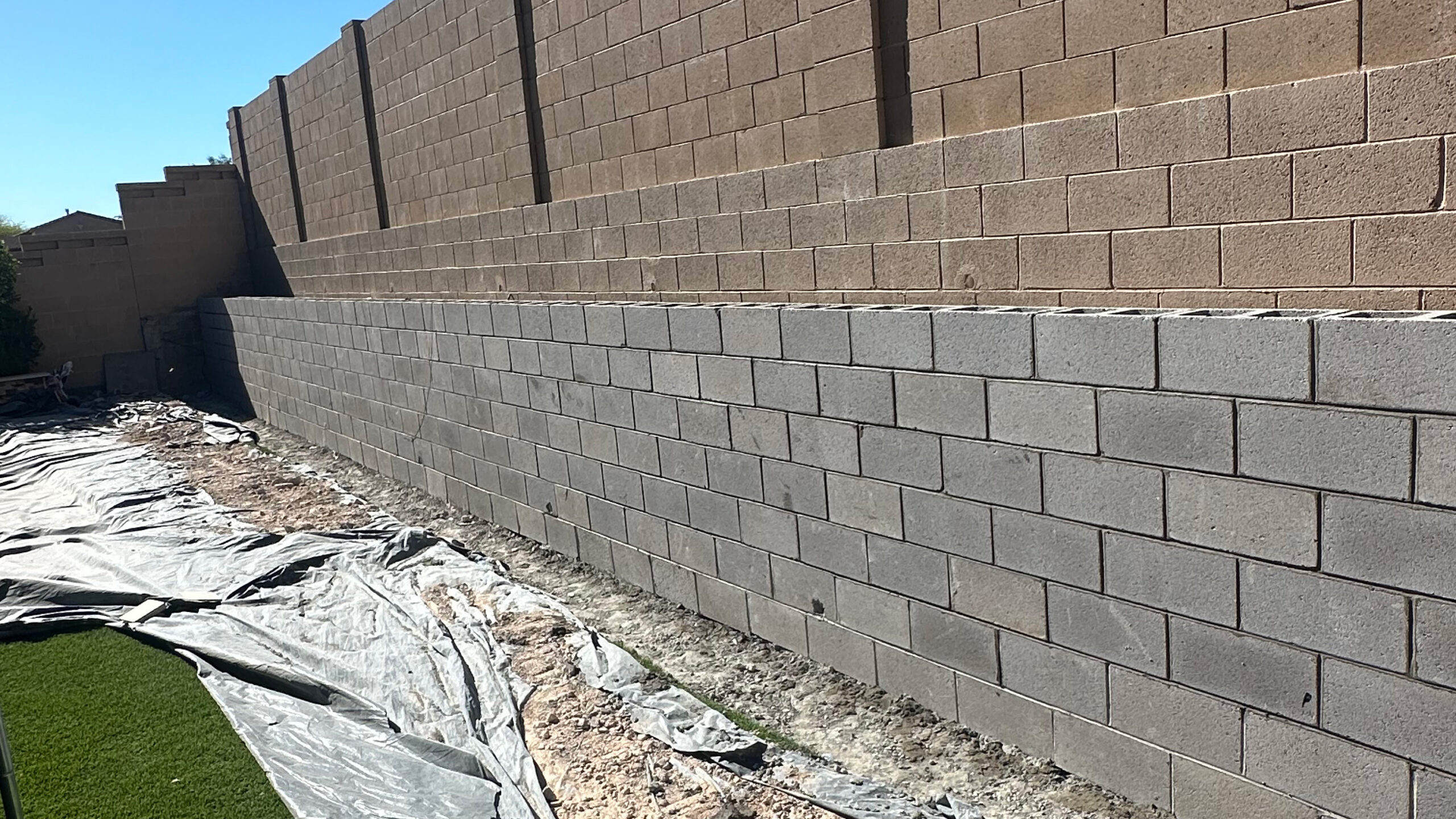
Matching Existing Brick, Block, and Mortar
Masonry color matching in Phoenix requires more than picking a shade out of a catalog. You are matching decades of Arizona sun, dust, and weathering. Getting it right requires test batches, specific sand sources, and precise joint tooling to blend new repairs with an existing wall.
When a wall requires repair, the goal is a patch that blends in perfectly. True masonry color matching in Phoenix requires matching four specific elements at the same time. A mason must match the base masonry unit, the cement tone, the sand color, and the exact physical shape of the joint.
Many contractors grab a standard bag of gray mortar and basic block. That process leaves a glaring gray patch on a faded tan wall, lowering property value and looking entirely unprofessional. This guide explains how skilled professionals match aged masonry, why mortar changes color as it cures, and how to avoid a mismatched checkerboard look on your property.
Key Takeaways
- Masonry color matching in Phoenix depends heavily on the sand source. Local sand pits dictate the baseline tan or gray tone of the joint.
- Brick color matching Phoenix homes often requires sourcing reclaimed bricks or using permanent masonry stains to blend new units.
- Mortar color matching Phoenix walls involves matching the physical shape of the joint. Deep joints cast darker shadows.
- Wall cleaning must happen before matching begins. Decades of dirt and oxidation hide the true underlying color of the masonry.
- Test patches are mandatory. Cured mortar shrinks and lightens, meaning the bucket color is never the final wall color.
The Four Variables of a Perfect Match
Masonry is not a solid sheet of color. It is an assembly of materials that each reflect light differently. Matching a repair to an existing wall means matching all four of these components.
The base color of the brick or block dictates the wall appearance. This fades significantly after years in the Arizona sun.
Sand makes up most of the mortar volume. The local sand pit used originally sets the baseline mortar color.
Standard gray portland cement looks completely different from white portland cement. Pigments are added by strict weight to shift the final tone.
The shape of the mortar joint casts a specific shadow. A recessed joint looks much darker than a flush joint regardless of the actual mortar mix.
Never try to match a dirty wall. A mason must clean the repair area first. If you match the dirt, the patch will look entirely wrong after the next heavy rain washes the wall.
Why Mortar Color Matching in Phoenix is Difficult
Mortar is mixed on site. It is not manufactured in a controlled factory setting. The original mason mixed sand, cement, water, and pigment under specific weather conditions. Recreating that exact chemistry decades later takes trial and error.
| Variable | Impact on Color | How to Control It |
|---|---|---|
| Sand Source | Determines the base tan or gray tone | Source sand from the same local pit if possible |
| Water Ratio | More water lightens the final cured mortar | Measure water precisely for every batch |
| Tooling Time | Tooling too early brings water to the surface, lightening the joint | Tool only when thumbprint hard |
| Weather | Fast drying in extreme heat creates a lighter, chalky appearance | Shade the repair and control the cure rate |
Standard gray cement turns out dark gray when cured. If your existing mortar is light tan, the mason must use white portland cement as the base before adding pigment to avoid a muddy color.
Brick Color Matching Phoenix Homes
Finding an exact match for a brick laid thirty years ago is nearly impossible. Manufacturers close, product lines end, and the sun bleaches the clay. You have a few realistic options for blending new brick into an old wall.
Reclaimed Brick
Sourcing reclaimed brick from local salvage yards offers the best physical match. The brick has already aged and weathered. This works perfectly for small patches but is difficult to scale for large wall additions.
Masonry Staining
When you can match the size and texture but not the color, staining is the answer. A specialized masonry stain permanently penetrates the new brick to match the aged color of the surrounding wall. It does not peel or flake like paint.
Matching Concrete Block (CMU)
Concrete block walls dominate Phoenix properties. While standard gray block is easy to locate, colored architectural block presents a different challenge altogether.
Integral Color Block
Many Phoenix block walls feature integral colors like split-face tan or slump block. The color is mixed into the concrete at the plant. Finding a match requires identifying the original manufacturer or ordering a custom run for large jobs.
Painted Block
If the wall is painted, the block color does not matter. The physical texture matters. A smooth block patched into a slump block wall will show a flat spot forever. The mason must match the block face texture exactly, then paint over the repair.
A poorly matched texture under fresh paint catches the light and highlights the repair. Always prioritize texture over base color on painted walls.
The Sample Board Process
Professional masons do not guess the color and immediately point the wall. They build sample boards to test the formula. This protects your property and ensures the repair blends naturally.
The mason records the exact weight of sand, cement, and pigment used in the test batch to replicate it exactly on the wall.
The sample must dry completely. Wet mortar is highly deceptive and always appears significantly darker than the final result.
The sample joint is struck with the exact same tool as the original wall to check how the shadow lines perform.
How Joint Tooling Affects Color
The physical profile of the mortar joint changes how light hits it. Two batches of identical mortar will look like two entirely different colors if they are tooled differently.
- Concave joints curve inward. They compact the mortar, making it slightly darker and highly weather resistant.
- Weathered joints slope backward. They catch light differently on the top edge than the bottom edge.
- Raked joints are scraped out flat. They cast a deep, dark shadow inside the wall.
- Flush joints are scraped flat with the brick face. They show the true color of the mortar with absolutely no shadow.
Striking the joint when it is too wet pulls cement paste to the surface. Striking it too late burns the mortar and turns it dark. Timing is critical for a matching finish.
Common Mistakes in Masonry Color Matching
Poor repairs stand out immediately. A bright gray patch on a red brick wall hurts curb appeal. These are the most frequent errors inexperienced contractors make.
Matching uncleaned brick means the patch will look completely wrong the moment someone power washes the wall.
Off-the-shelf masonry cement is uniform gray. It will never match an aged, custom-mixed mortar joint.
Using white play sand instead of masonry sand shifts the entire base tone of the repair.
Using a slicker tool on a brushed joint creates a smooth line that catches the sun and highlights the repair.
Retempering stiff mortar with extra water bleaches the color out of the final cured joint.
Approving a color match while the test sample is still wet guarantees a mismatched wall.
Decades ago, lime-based mortars were common. Modern portland cement mortars cure much harder and grayer. A mason must match the chemical makeup as well as the color to prevent damaging the old brick.
Masonry Staining vs. Tinted Mortar
There are two primary ways to alter masonry color. You can tint the mortar during mixing, or you can stain the wall after the repair cures.
| Method | How It Works | Best Application |
|---|---|---|
| Tinted Mortar | Iron oxide pigments are blended into the dry mix before adding water. | Small repointing jobs and matching existing tinted mortar joints. |
| Masonry Stain | A mineral silicate stain penetrates the pores of the cured brick or mortar. | Blending mismatched bricks, changing whole wall colors, or correcting a bad previous repair. |
| Painting | A latex or acrylic coating sits on top of the masonry surface. | Block walls already coated in paint. Avoid painting natural brick, as it traps moisture. |
How Wall Damage Alters Color Perception
Sometimes the color mismatch is actually a symptom of moisture damage. Fixing the color requires fixing the underlying water issue first.
Efflorescence
White, chalky stains appear when water moves through the wall and leaves salt deposits behind. You cannot match this color. You must stop the water and clean the salts off.
Washed-Out Joints
Eroded mortar sits deeper in the wall, casting heavy shadows. Repointing brings the joint flush again, which makes the wall look naturally lighter.
Organic Growth
Algae and mildew turn lower wall sections green or black. This requires a specialized chemical wash before any repair matching can begin.
Hard Repointing
Previous repairs using the wrong cement type will look rigid and gray. They often cause the brick edges to break off. The bad mortar must be cut out entirely.
Questions to Ask Your Mason
For more details on handling severely damaged mortar, review our guide on Repointing failed joints.
Frequently Asked Questions
Can you color match old mortar exactly?
An exact, invisible match is rare due to decades of sun and weather exposure. A skilled mason can get the color and texture close enough that the repair blends naturally into the wall without drawing the eye.
Why does my new mortar look so much lighter?
New mortar often looks lighter because it lacks years of dirt and oxidation. If it looks chalky white, the contractor may have added too much water during mixing or let it dry out too quickly in the hot Phoenix sun.
Can you stain existing brick to match an addition?
Yes. Specialized masonry stains penetrate the brick to alter its color permanently. This is the best way to blend a new brick addition into a heavily faded older home.
Does the sand type change the mortar color?
Yes. Sand provides the bulk of the mortar mixture. Using a different local sand pit than the original builder will shift the base tone of the mortar, even if the cement and pigments are identical.
Talk to a Phoenix Masonry Contractor About Your Repair
New Era Masonry handles block, brick, and stone repairs across Phoenix, Scottsdale, Mesa, Gilbert, and Paradise Valley. We do the hard work to blend repairs naturally. Our crews mix test batches, source the right materials, and match the original joint tooling.
Stop staring at glaring gray patches on your block wall. We provide written proposals for tuck pointing, brick replacement, block repair, and custom masonry staining. Licensed, bonded, and insured, ROC #339091.
Need Professional Masonry Repair?
New Era Masonry will evaluate your wall, clean the repair area, and develop a custom mix to blend your brick and mortar correctly.
Request a Written Proposal View Masonry RepairsWritten by the New Era Masonry team, an Arizona masonry contractor with more than 40 years of block, brick, stone, and concrete work across three generations of masons.