
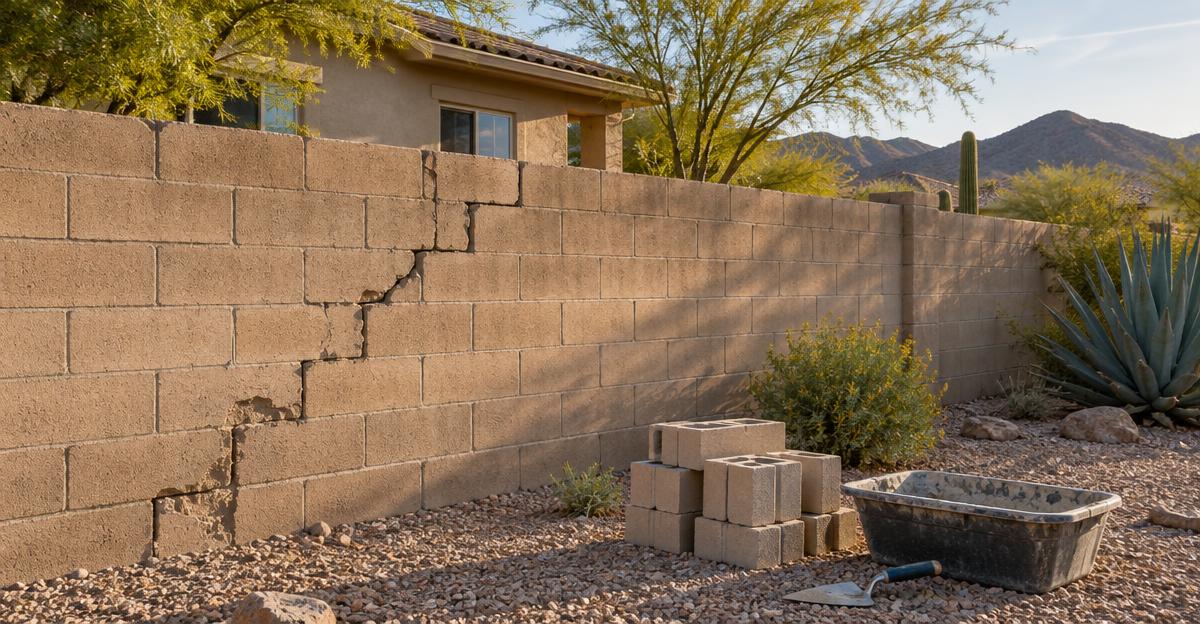
Understanding Phoenix Masonry Fence Repair Pricing
Homeowners often want a flat rate for block wall repair cost phoenix. The reality is that repairing a masonry fence involves tearing down damaged sections, evaluating the concrete footing, installing new block, and blending the final finish. A fast patch job will fail if the underlying support is compromised.
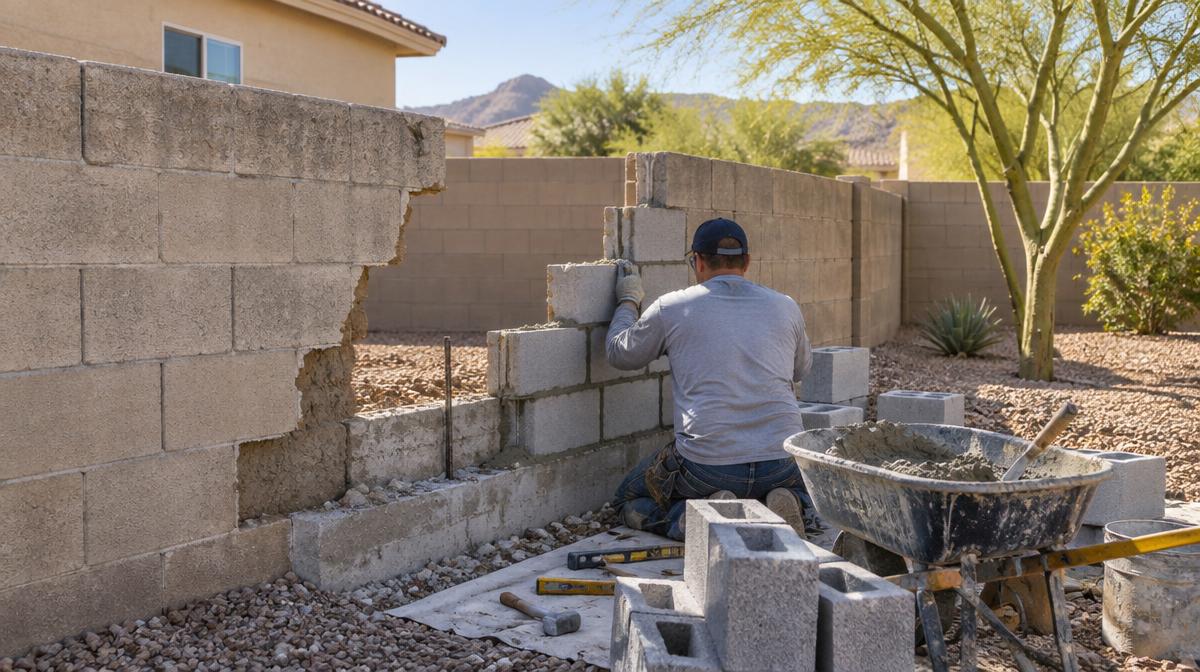
Every damaged block wall requires a specific sequence of work. A masonry contractor must demolish the broken units, check the concrete footing, weave new block into the old structure, and match the existing finish. The final price depends directly on how long that process takes and how much material leaves the site as trash.
This guide explains the exact variables that drive repair pricing, how property access changes the labor required, and what a professional masonry wall repair estimate should include before you sign.
Key Takeaways
- Wall height dictates structural requirements. Walls over six feet often trigger engineering rules and city permits in Arizona.
- Site access changes labor costs. Hand carrying concrete debris through a narrow side gate takes longer than using machine access in an alley.
- Cosmetic matching takes time. Faded stucco and aged paint make perfectly invisible repairs difficult.
- Debris removal adds fixed fees. Hauling away heavy concrete rubble involves labor and Maricopa County landfill charges.
- The footing matters most. Rebuilding a wall on a cracked or shifted concrete base guarantees future failure.
Core Variables That Drive the Price
Two different properties can have identical wall damage but receive completely different repair quotes. The price changes based on the logistics of getting the work done.
A surface crack requires routing and tuckpointing. A vehicle impact requires full demolition, new block, and heavy concrete work.
Clear alley paths allow fast machine work. Narrow yards force crews to move thousands of pounds of material by hand.
Taller walls require scaffolding, heavier vertical rebar schedules, and solid grouted cells to meet structural codes.
Standard gray cinder block is cheap to finish. Custom stucco textures and exact paint matching require specialized labor.
A masonry crew must load the truck, mix fresh mortar, and travel to your property regardless of the repair size. This mobilization time means fixing three broken blocks will always have a higher cost per square foot than rebuilding a fifty foot fence.
Realistic Repair Cost Ranges
Contractors bid block wall repair phoenix az based on the exact scope of work. These scenarios represent common residential repair costs across the valley.
| Repair Scenario | Scope of Work | Realistic Range |
|---|---|---|
| Minor Mortar Cracking | Routing out old joints and repointing with fresh mortar | $400 to $900 |
| Vehicle Impact (Small Section) | Demolition, installing new block, and tying into existing rebar | $1,500 to $3,500 |
| Structural Footer Failure | Removing the wall, pouring a new concrete footing, and rebuilding | $3,000 to $6,000+ |
| Stucco and Paint Blending | Applying cosmetic finish coats to match the repaired section | Adds $300 to $800 |
Do not let anyone skim coat a structural crack with stucco. Stucco is a cosmetic finish with zero structural strength. It will snap the moment the underlying block shifts.
Wall Height and Engineering Requirements
The height of the masonry directly dictates how much steel and concrete goes inside it. Local municipalities strictly enforce these structural differences.
Standard Privacy Fences
Most residential block walls sit at six feet or lower. These carry standard wind loads and run on simple continuous footings. Repairing these is straightforward and involves standard rebar spacing and matching the block face.
Tall Walls and Retaining Structures
Walls that hold back dirt or exceed six feet face strict engineering rules. Repairing these requires thicker concrete footings, dense rebar schedules, and solid grouted cells. This additional steel and concrete increases the final price.
If your damaged wall acts as a property line retainer, expect higher permit fees and extended timelines for city inspections.
Access and the Hidden Cost of Moving Concrete
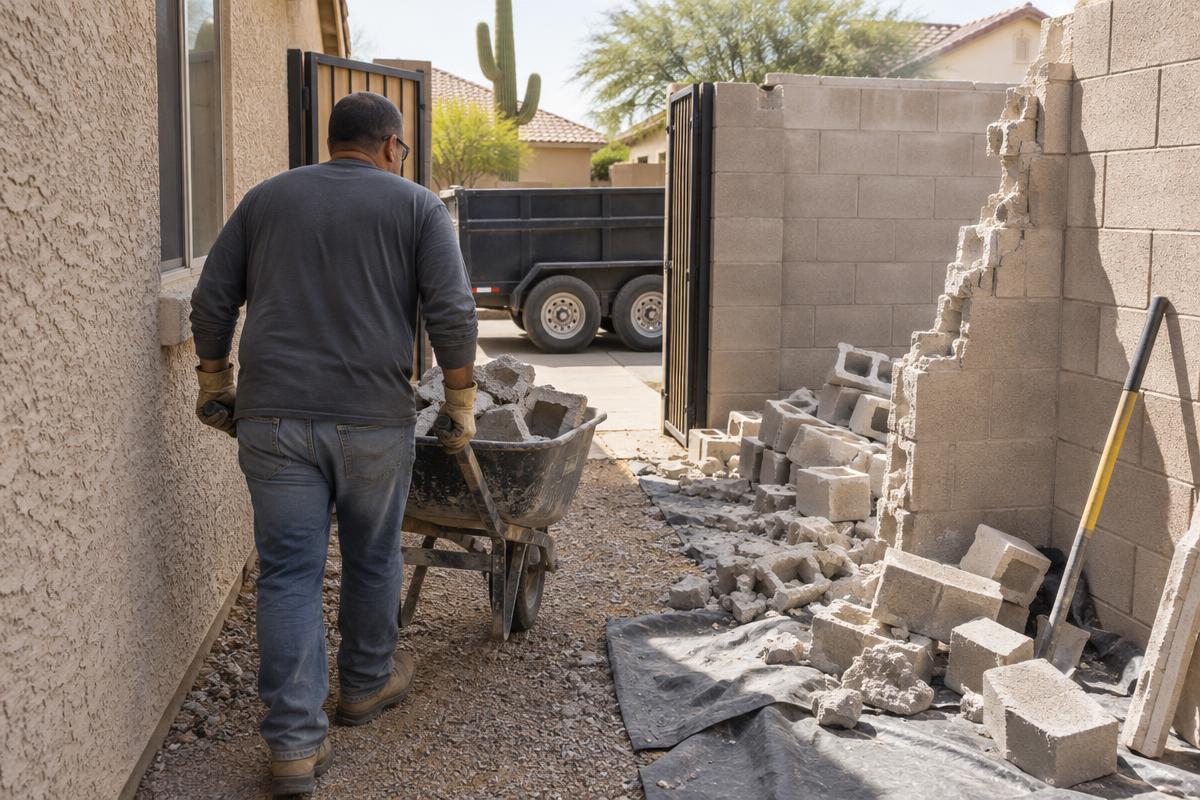
The hardest part of a repair is often managing the trash. A standard cinder block weighs 35 pounds. A wall knocked over by a trash truck leaves thousands of pounds of rubble behind.
Demolition Logistics
Every piece of broken block and old footing must be loaded, transported, and dumped at a Maricopa County facility. The dump charges by weight. If the crew has clear alley access, a skid steer can load the debris in an hour.
If the wall sits in a backyard with a narrow gate, the crew must break the concrete by hand and move it out in wheelbarrows. This manual labor significantly increases the cinder block wall repair cost.
Requires a wide, clear path. Keeps labor costs low and speeds up demolition.
Required for tight side yards. Adds hours of hard physical work to the bill.
What to Look for in Your Estimate
A professional masonry contractor provides a detailed breakdown of the work. Vague estimates lead to hidden charges later.
- Total linear footage and height of the repair area.
- Clear costs for demolition and debris disposal.
- Verification of footing condition and replacement steps if necessary.
- Rebar sizing, vertical spacing, and grout specifications.
- Details on mortar color matching or custom stucco application.
- Permit pulling responsibilities if the local municipality requires one.
The Five Steps of a Professional Repair
Rebuilding a wall correctly requires a specific sequence. Skipping any of these steps compromises the final structure.
The crew removes damaged blocks down to a solid base.
Masons inspect the concrete footing for settling or root damage.
Workers drill and epoxy new vertical rebar into the footing.
Masons lay new concrete units with fresh mortar.
The crew applies stucco or paint to blend the patch.
Common Causes of Wall Failure
Walls rarely fail without a specific external trigger. Identifying the root cause prevents the new repair from breaking a year later.
Tree Root Heaving
Mature roots lift the concrete footing from below. The tree or the offending roots must be dealt with before the wall is rebuilt.
Vehicle Impacts
Alley walls take frequent hits from delivery trucks. This shatters the block face and usually snaps the internal vertical rebar.
Ground Settlement
Poorly compacted soil allows the footing to sink over time. This creates distinct stair step cracks through the mortar joints.
Moisture Degradation
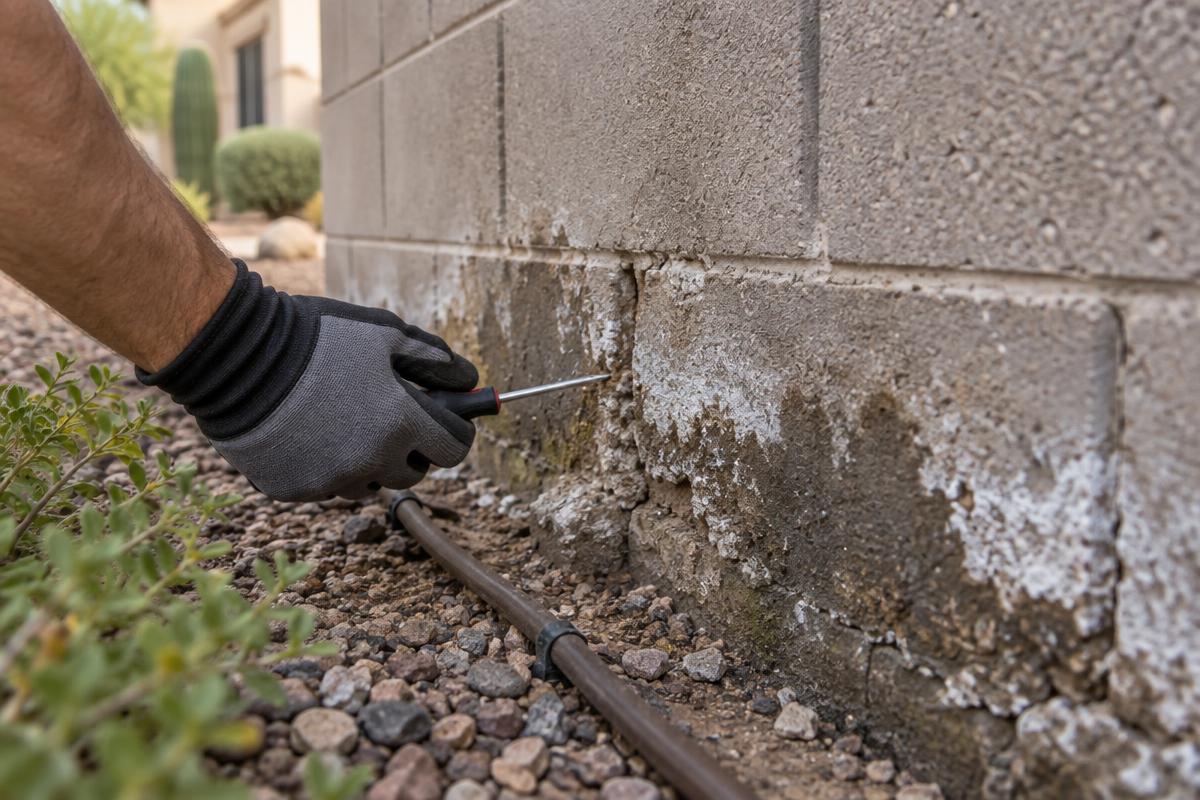
Poor yard drainage forces standing water into the base of the wall. This erodes the mortar and weakens the foundation over decades.
Questions to Ask Your Masonry Contractor
Before agreeing to the work, ask these direct questions to ensure the crew understands structural repairs.
For more details on block types used in repairs, review our masonry service resources.
Frequently Asked Questions
How much does cinder block wall repair cost?
Minor mortar joint repairs range from $400 to $900. Rebuilding a damaged section typically costs $1,500 to $3,500 depending on the height, access, and finish matching required.
Do I need a permit to fix my block wall?
It depends on your city and the wall structure. Minor mortar repairs usually do not require one. Rebuilding sections over six feet or fixing retaining walls almost always requires a permit in the Phoenix area.
Why is it so hard to match my existing wall?
Block, mortar, and stucco fade heavily in the Arizona sun. Fresh materials will always look slightly different until they weather, and matching custom stucco textures takes specialized skill.
Who does block wall repair near me?
Licensed masonry contractors handle these repairs. General handymen often lack the structural knowledge required for proper footing evaluation and rebar installation.
Can I just paint over the block cracks?
Painting covers the visual damage but ignores the structural problem. If the footing is shifting or a root is pushing the wall, the crack will reappear through the new paint within a few months.
Talk to a Phoenix Masonry Contractor About Your Wall
New Era Masonry works throughout Phoenix, Gilbert, Mesa, Scottsdale, Paradise Valley, and surrounding communities. We handle commercial and residential masonry repairs, vehicle impact rebuilds, tuckpointing, perimeter walls, retaining walls, and custom block work.
If you have a damaged block wall, sinking footings, or need an exact match for a broken fence, reach out for a written proposal. Licensed, bonded, and insured, ROC #339091.
Need a Formal Masonry Repair Estimate?
New Era Masonry can evaluate the wall, identify the footing condition, review finish matching, and explain the exact scope of work before the repair begins.
Request a Written Proposal View Masonry RepairsWritten by the New Era Masonry team, an Arizona masonry contractor with more than 40 years of block, brick, stone, and concrete work across three generations of masons.